
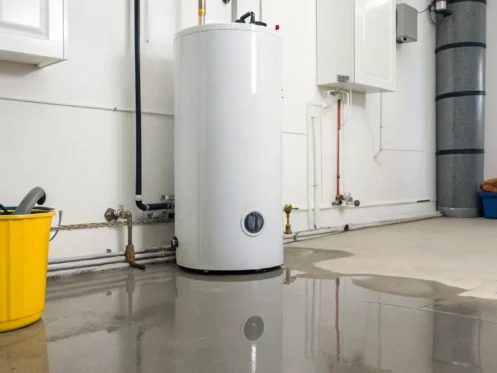
That small puddle you noticed didn’t appear out of nowhere. A water heater tank leaking from bottom is often the final, most obvious sign of a problem that has been developing for a while. Issues like sediment buildup, internal corrosion, and failing safety valves can stress your system for months or even years before you see a single drop of water. For homeowners in Tucson and Sahuarita, where our hard water can be particularly tough on appliances, proactive maintenance is key. This guide will show you not only how to handle an active leak but also how to prevent one from happening in the first place.
Key Takeaways
- Prioritize Safety and Damage Control: If you find a leak, your first steps are to shut off the water and power to the unit. This contains the immediate problem and keeps you safe while you investigate where the water is coming from.
- Distinguish Between a Repair and a Replacement: A leak from a valve or pipe connection can often be repaired, but water pooling directly under the tank usually means internal corrosion has occurred and a full replacement is necessary.
- Prevent Leaks with Annual Maintenance: You can significantly extend your water heater’s life by scheduling yearly professional service. Key tasks like flushing sediment and inspecting the anode rod are your best defense against surprise leaks and premature failure.
Is Your Water Heater Leaking from the Bottom?
Discovering a puddle under your water heater is an undeniable sign of trouble. But sometimes, the warnings are more subtle. A leak at the base often means the internal tank has failed, which is a serious issue that requires immediate attention. Before you see any water, your unit might be giving you other clues that something is wrong. Paying attention to these signs can help you act quickly and avoid a much bigger mess down the road. A small issue can quickly turn into a major flood, causing extensive damage to your floors, walls, and personal belongings. That’s why it’s so important to know what to look for. If you live in Tucson, Marana, or Oro Valley, catching these problems early can save you a lot of stress and money. Here are the key warning signs that your water heater might be leaking from the bottom, even if you don’t see a large pool of water just yet.
Puddles of Water at the Base
The most obvious red flag is, of course, water on the floor. Seeing water dripping from the tank or pooling underneath is one of the most direct signs your hot water heater is failing. Don’t dismiss a small puddle as simple condensation, especially if it keeps coming back. A persistent leak, no matter the size, indicates a problem that will only get worse. This moisture can damage your floors, subflooring, and drywall, leading to costly repairs. If you spot water, it’s time to call for a professional residential plumbing inspection to find the source and prevent further damage to your home.
Rust and Corrosion Stains
Take a close look at your water heater tank and the water that comes out of your hot water taps. Do you see any rust-colored stains on the unit itself? Is your hot water tinged with a reddish-brown color? These are clear indicators of internal corrosion. Over time, the inside of the steel tank can rust and deteriorate, compromising its structure. Rust is a sign that the tank’s integrity is weakening from the inside out. A corroded tank can’t be repaired and will eventually spring a major leak or burst completely, so this is a problem you need to address right away.
Strange Noises from the Tank
Your water heater should operate fairly quietly. If you start hearing popping, rumbling, or crackling sounds, it’s a cry for help. These noises are usually caused by a buildup of sediment and mineral scale at the bottom of the tank. As the burner heats the water, steam bubbles get trapped under this layer of sediment and make a popping sound as they escape. This process puts a lot of stress on the tank’s metal, leading to cracks and leaks over time. Regular flushing, which is part of a good maintenance agreement, can prevent this buildup and extend the life of your unit.
A Sudden Spike in Your Water Bill
Sometimes the first sign of a leak isn’t visible at all; it shows up on your utility bill. A slow, steady leak can waste a surprising amount of water, causing your bill to jump without any other explanation. If your water usage suddenly increases, a hidden leak from your water heater could be the culprit. You might also notice a musty or moldy smell near the unit. These foul smells can indicate bacterial growth in the standing water from a leak. If you suspect a problem, it’s best to have it checked out immediately.
What Causes a Water Heater to Leak from the Bottom?
Finding a puddle under your water heater is never a welcome sight. While it’s easy to assume the worst, a leak from the bottom can point to several different issues, ranging from a simple loose connection to a more serious internal problem. Figuring out the root cause is the first step toward getting it fixed. Let’s walk through the most common culprits so you can get a better idea of what you’re dealing with.
Internal Tank Corrosion
This is often the most serious reason for a leak and, unfortunately, the most common one for older units. Inside your water heater tank is a component called an anode rod, which is designed to corrode so your tank doesn’t. Over time, this rod gets used up. Once it’s gone, the water and minerals start eating away at the steel tank itself. This corrosion eventually creates cracks and holes, causing water to leak from the bottom. If internal rust is the problem, the tank can’t be repaired, and a full replacement is the only solution. Our team can help you explore your options for a new water heater as part of our residential plumbing services.
Damage from Sediment Buildup
Here in Tucson, we have notoriously hard water, which is full of minerals. These minerals can settle at the bottom of your water heater tank over time, creating a thick layer of sediment. This layer insulates the water from the burner or heating element, forcing it to work harder and run longer. This can create “hot spots” on the bottom of the tank, causing the metal to become brittle, crack, and eventually leak. Regular flushing can prevent this buildup, which is why we include it in our maintenance agreement to help extend the life of your unit and keep it running efficiently.
A Faulty Drain Valve
On a more positive note, the leak might be coming from the drain valve. This is a small, spigot-like valve located at the bottom of the tank used for draining it. Sometimes, these valves can leak if they aren’t completely closed after being used. Try tightening the handle to see if that stops the drip. If it continues to leak, the valve itself might be old, cracked, or have a worn-out washer. The good news is that replacing a drain valve is a straightforward and relatively inexpensive repair compared to replacing the entire tank. If you’re not comfortable doing it yourself, you can schedule online with us to have a technician take a look.
Problems with the Temperature and Pressure (T&P) Valve
Every water heater has a temperature and pressure (T&P) relief valve as a safety feature. Its job is to open and release water if the temperature or pressure inside the tank gets dangerously high. This valve is usually on the top or side of the tank, with a discharge pipe running down to the floor. If this valve is faulty or if there’s an issue with excessive pressure, it will release water that pools at the base of the heater. A leaking T&P valve is a serious sign that needs immediate attention from a professional, as it could indicate a hazardous pressure situation.
Loose Water Connections
Sometimes the leak isn’t from the tank at all. Your water heater has cold water inlet and hot water outlet pipes connected at the top. If one of these fittings becomes loose over time, water can drip down the side of the unit and collect on the floor. This makes it appear as though the leak is coming from the bottom. Carefully check the area around these connections for any signs of moisture or dripping. Tightening a loose connection is a simple fix, but if the leak persists, it’s best to have a professional plumber inspect it to avoid potential water damage.
How to Find the Source of the Leak
Okay, you’ve spotted water, but where is it actually coming from? Pinpointing the source is your first mission. It helps you understand if you’re dealing with a simple fix, like a loose connection, or a more serious problem that requires a professional. Before you get overwhelmed, let’s walk through a few simple inspection steps you can take right now. This process doesn’t require any special skills, just a little patience and a careful eye.
By taking a few minutes to investigate, you can gather important information that will help you decide on the next best step. Sometimes, the fix is surprisingly easy. Other times, knowing the source helps you give our technicians a clear picture of the problem when you call. Either way, you’ll be more in control of the situation. Our team is always ready to handle any residential plumbing issue, but a quick diagnosis on your end can save time and stress.
Tools You’ll Need for a Quick Inspection
You don’t need a professional-grade toolbox for this initial check. Just grab a good flashlight and some dry paper towels. The flashlight will help you see into the dark corners around the base and back of the water heater. The paper towels are great for wiping down damp spots and then checking them again a few minutes later to see if new moisture appears. This simple trick helps confirm an active leak versus old condensation. If you happen to have a humidity tester, it can also help you find hidden moisture, but it’s not a must-have for this first look.
Inspect the Drain Valve
Start your inspection at the very bottom of the tank. You should see a spigot-like valve, which is the drain valve. This is used to empty the tank for maintenance. Sometimes, it can be the source of a slow drip if it wasn’t closed tightly after its last use or if the washer inside has worn out. Feel around the valve and its nozzle for any moisture. Make sure the handle is turned clockwise as far as it will go to ensure it’s fully closed. If you find water here, you may have found your culprit.
Check the T&P Valve and Discharge Pipe
Next, locate the temperature and pressure (T&P) relief valve. This is a critical safety feature, usually found on the side or top of the tank, with a pipe running from it down toward the floor. Its job is to release water if the temperature or pressure inside the tank gets too high. Check for water dripping from the valve itself or from the end of the discharge pipe. A leak here could mean the valve is faulty or, more seriously, that there’s excessive pressure building in your tank. This is a problem that needs prompt attention from a heating service professional.
Examine All Connections and Fittings
Now, look up. Your water heater has two pipes connected to the top: the cold water inlet and the hot water outlet. Over time, the fittings on these pipes can corrode or loosen, causing small leaks that run down the side of the tank. Carefully run a dry paper towel around these connections to check for any dampness. It can be tricky to spot, as the water might evaporate from the heat of the tank, leaving behind only mineral deposits. A leak here is often a straightforward fix for a plumber but is best left to a professional to avoid causing more damage.
Is It a Leak or Just Condensation?
Finally, it’s important to determine if you’re seeing a leak or just condensation. Condensation can form on the outside of the tank, especially during humid Tucson weather or if the heater is in a cool basement. It usually appears as a light, even layer of moisture. A true leak, however, will often create a distinct puddle or drip from a specific point. If you see water pooling directly under the center of the tank, it’s a strong sign that the inner tank has rusted through. Unfortunately, this is an internal failure and means it’s time to schedule a replacement.
What to Do Immediately When Your Water Heater Leaks
Discovering a puddle around your water heater can be alarming, but don’t panic. Acting quickly is the key to minimizing damage and keeping your home safe. A small leak can escalate fast, so taking a few immediate, decisive steps can save you from a much bigger headache down the road. Think of it as first aid for your home’s plumbing system. Before you even think about repairs or replacements, your first priority is to get the situation under control. Follow these steps in order to safely manage a leaking water heater and protect your property from significant water damage.
Turn Off the Water Supply
Your first move should always be to stop more water from entering the tank. Find the main water shut-off valve for your house and turn it off completely. This valve is usually located where the main water line enters your home, often in a utility closet, basement, or garage. Turning it will cut off the water flow to the entire house, which is necessary to prevent the leak from worsening. Understanding your home’s basic residential plumbing setup, like where this valve is, is incredibly helpful in an emergency. Some water heaters also have a dedicated cold water inlet valve on top of the tank; if you can safely reach it, shutting this off will also stop water from feeding the leak.
Shut Down the Power or Gas
This step is all about safety. Water and electricity are a dangerous combination, and a gas leak is a serious hazard. If you have an electric water heater, go to your home’s circuit breaker panel and switch off the breaker that powers the unit. It should be clearly labeled. For a gas water heater, you’ll find a control knob or dial on the gas line leading to the tank. Turn this to the “OFF” position. This stops the gas flow and prevents the burners from igniting. Handling the power source is a key part of any work involving your home’s heating services, and it’s especially critical during a leak.
Contain the Water
Now that you’ve stopped the source and secured the power, it’s time to manage the mess. Grab some old towels, buckets, or a wet/dry vacuum to start removing the water that has already leaked out. Containing the water helps prevent it from seeping into your subfloor, drywall, and framing, which can lead to mold growth and costly structural repairs. If the leak is slow, you might be able to place a bucket or pan underneath to catch the drips. The goal is to keep the area as dry as possible while you figure out your next steps.
Key Safety Precautions
While you’re working, always put safety first. If there’s a lot of standing water near the heater, do not touch any electrical appliances or step into the water until you are absolutely certain the power is off. For gas heaters, if you smell gas after turning off the supply, leave your home immediately and call your gas company from a safe distance. Remember, these initial steps are about damage control. A leaking water heater often points to a bigger problem that requires professional attention. Once the immediate situation is stable, it’s time to schedule an appointment with a trusted plumber in Tucson or Sahuarita.
Can You Fix a Leaking Water Heater Yourself?
Spotting a leak from your water heater can definitely be alarming, and it’s natural to wonder if you can tackle the repair yourself. The good news is that some leaks are relatively simple fixes. However, other leaks are clear signs of a much bigger problem that requires a professional. The key is knowing how to tell the difference so you can protect your home from water damage without taking on a risky or pointless repair. Before you grab your tools, let’s walk through what you might be able to handle and when it’s time to call for backup.
What You Can Fix vs. When to Replace
The source of the leak is the biggest clue to whether you have a simple repair or a major replacement on your hands. If water is dripping from a valve or a pipe connection, you might be in luck. These components can often be tightened or replaced without needing a whole new unit. For example, a leaky drain valve is a common issue with a straightforward solution.
However, if you see water seeping from the bottom of the tank itself, it almost always means the inner tank has rusted through. Unfortunately, this kind of internal corrosion cannot be fixed. It’s a sign that your water heater has reached the end of its life, and trying to patch it will only delay the inevitable failure.
How to Replace the Drain Valve
The drain valve is located at the very bottom of your water heater tank and is used to empty it. If you notice a slow drip coming from this spot, your first step is to check if the handle is completely closed. Sometimes, it can get bumped or just wasn’t tightened all the way after its last use. Try giving the handle a gentle turn to make sure it’s snug.
If tightening it doesn’t stop the leak, the valve itself is likely faulty. While replacing a drain valve is a common repair, it does involve draining the entire tank. For homeowners in Tucson and Sahuarita, having a professional handle your residential plumbing needs ensures the job is done correctly and without making a mess.
How to Repair the T&P Valve
The temperature and pressure (T&P) valve is a critical safety feature on the top or side of your tank. It’s designed to release water if the temperature or pressure inside gets dangerously high. If you see water leaking from the attached discharge pipe, it could mean one of two things: either the valve is faulty, or your tank has an excessive pressure problem.
Because high pressure can be a serious safety risk, it’s important to address this immediately. While a broken valve is a simple replacement, you need to be sure that’s the only issue. It’s always safest to have a professional technician diagnose the problem to determine if it’s just the valve or a sign of something more serious with your system.
When to Avoid a DIY Repair
Knowing your limits is crucial when it comes to plumbing. The number one rule is to avoid any DIY repair if the tank itself is leaking. A puddle of water directly under the unit is a strong indicator that the internal tank has failed due to corrosion. At this point, the only solution is a full replacement. Attempting a patch is not only ineffective but can lead to a sudden and catastrophic tank failure.
Additionally, you should always leave repairs involving gas lines or complex electrical wiring to certified professionals. If you’re not 100% confident in what you’re doing, it’s better to be safe than sorry. You can schedule online with our team in Oro Valley or Marana for a quick and safe inspection.
When Should You Call a Professional Plumber?
Okay, you’ve done your inspection and maybe even tried a simple fix, but the problem persists. Knowing when to step back and call for help is just as important as knowing how to tighten a wrench. While it’s tempting to save money with a DIY repair, most water heater issues are best left to the experts. A professional plumber not only has the right tools and parts but also the experience to diagnose the root cause of the leak accurately. What looks like a simple drip from a fitting could actually be a symptom of a much larger problem, like excessive pressure inside a failing tank.
Attempting a complex repair without the proper training can easily make the situation worse, turning a small leak into a major flood or creating a safety hazard, especially with gas models. A licensed technician can assess whether a simple repair will do the trick or if a full replacement is the more cost-effective and safer option in the long run. If you’re in Tucson, Marana, or Sahuarita and feel out of your depth, don’t hesitate to get a professional opinion. It’s the surest way to protect your home and get your hot water running again safely.
Signs You Need a Full Replacement
Sometimes, a water heater is simply beyond repair. The most definite sign is a leak coming from the bottom of the tank itself. This almost always means the inner tank has rusted through, and unfortunately, that kind of damage is permanent. Other clues include the age of your unit (if it’s over 10-12 years old, it’s living on borrowed time), widespread corrosion on the outside of the tank, or water that consistently comes out rusty. If you’re seeing any of these signs, it’s time to start thinking about a new water heater. A professional can confirm the diagnosis and help you find a reliable replacement.
For Complex Valve and Connection Repairs
While replacing a faulty T&P or drain valve might seem straightforward, these jobs can get complicated fast. Fittings can be corroded and seized, requiring special tools and techniques to remove without damaging the tank itself. Getting a perfect, watertight seal on the new valve is also critical; a small mistake can lead to a persistent, slow leak that causes damage over time. If you’re not completely comfortable with tasks like soldering pipes or dealing with stubborn connections, it’s wise to call a plumber. They can handle these residential plumbing repairs efficiently and ensure the job is done right the first time, saving you a major headache.
If You Have a Gas Water Heater
This is a big one: if you have a gas water heater, any repair that involves the gas line is a job for a professional, period. Working with natural gas is incredibly dangerous if you don’t have the proper training and certification. A mistake can lead to a gas leak, which poses a serious risk of fire, explosion, or carbon monoxide poisoning. This includes issues with the gas control valve, the thermocouple, or the burner assembly. Even if you’ve turned the gas off, don’t attempt the repair yourself. Always call a certified technician who is qualified to work on gas appliances safely.
In an Emergency
A small, slow drip is one thing, but a steady stream of water pouring from your water heater is a full-blown emergency. A small leak can quickly escalate into a major flood, causing thousands of dollars in water damage to your floors, walls, and belongings. If you’re facing a burst tank or a leak that you can’t contain in a bucket, your priority should be shutting off the water and power, then calling for help immediately. Our team can respond quickly 24/7 to handle emergencies in Oro Valley, Oracle Foothills, and the greater Tucson area, minimizing the damage and getting your home back to normal.
The Risks of Ignoring a Water Heater Leak
That small puddle under your water heater might seem like something you can deal with later, but putting it off is a risky bet. A leak is almost always a symptom of a bigger problem that will only get worse, more destructive, and more expensive over time. It’s not just about a wet floor; it’s about protecting your home and your family from serious issues. Ignoring the warning signs can lead to widespread property damage, potential health hazards from mold growth, and even a full-blown flood inside your home. Taking action quickly is the best way to prevent a minor drip from turning into a major disaster.
Serious Water Damage to Your Home
Even a slow, steady leak can cause significant harm. Water has a way of finding its way into everything, seeping into your flooring, subfloor, drywall, and baseboards. Over time, this constant moisture can warp wood, crumble drywall, and compromise the structural integrity of your home. What starts as a small, contained puddle can lead to thousands of dollars in repairs to your home’s foundation and framework. If you spot signs of a leak, it’s crucial to get professional help to prevent minor water issues from becoming a major renovation project. Our team offers comprehensive residential plumbing services to address leaks before they cause lasting damage.
Mold Growth and Health Issues
Where there’s persistent moisture, mold is sure to follow. The dark, damp area around a leaking water heater is the perfect breeding ground for mold and mildew. You might notice a musty or foul smell, which can indicate bacterial growth inside the tank or in the standing water around it. The presence of mold isn’t just unpleasant; it can also pose a risk to your family’s health. The health effects of mold can include triggering allergies, causing respiratory problems, and irritating the eyes, nose, and throat, especially for those with asthma or compromised immune systems. Protecting your home’s air quality starts with addressing the source of the moisture.
A Complete Tank Failure and Flood
The most catastrophic risk of a leak, especially one from the bottom of the tank, is a complete tank failure. A leak from the base often means the inner tank has rusted through, and this kind of damage is permanent. It’s a clear sign that the structural integrity of the water heater is gone, and it’s only a matter of time before it gives way entirely. When it does, you could have 40, 50, or more gallons of water flooding your garage, basement, or utility closet in a matter of minutes. This can destroy personal belongings and lead to extensive, costly water damage. If you suspect your tank is compromised, don’t wait for it to burst. It’s best to schedule an inspection right away.
What Does Water Heater Leak Repair Cost?
Figuring out the cost to fix a leaking water heater can feel a bit like a guessing game. The final price tag depends on what’s causing the leak, the type of water heater you have, and whether it’s a simple repair or a full replacement. While a minor fix might only set you back a couple of hundred dollars, a major issue could lead to a much larger investment. It’s one of those home repairs where the cost can vary widely, so knowing the potential expenses ahead of time can save you a lot of stress.
To give you a clearer idea of what to expect, let’s break down the costs for some of the most common scenarios. We’ll look at simple fixes like replacing a valve all the way up to the cost of a brand-new unit. Remember, these are just estimates. The best way to get an accurate number for your situation in Tucson, Marana, or Sahuarita is to have a professional plumber take a look. Getting a clear, upfront quote protects you from surprises and helps you make an informed decision about your home’s plumbing system. We believe in transparency, so you’ll always know the full cost before we start any work.
Cost to Replace a Valve
If the leak is coming from a faulty drain valve or T&P valve, you might be in luck. Replacing a valve is one of the more common and affordable repairs. On average, homeowners can expect to spend between $203 and $800 for a single water heater fix, with the national average sitting around $501. A valve replacement typically falls within this range.
Since a leaky valve can sometimes be a symptom of a bigger problem like excessive pressure or sediment buildup, it’s important to have a professional diagnose the issue correctly. For our technicians, this is a relatively straightforward fix that can get your system back in working order quickly and prevent a small drip from turning into a major flood.
Cost of a New Water Heater
Sometimes, a repair just doesn’t make financial sense. If your tank is old and corroded, or if the repair costs are approaching the price of a new unit, replacement is often the smarter long-term solution. While some minor water heater repairs can be as low as $90, extensive work can climb toward $1,700 or more.
A good rule of thumb is the 50% rule: if the cost of the repair is more than half the cost of a new water heater, it’s time to consider a replacement. A new unit will be more energy-efficient, saving you money on utility bills, and it comes with a new warranty for peace of mind. If you’re unsure which path to take, we can help you compare the costs and benefits when you schedule an appointment.
What Affects the Final Price?
Several factors can influence the final price of your water heater repair. The type of unit you own is a big one. Traditional tank water heaters are generally simpler and less expensive to fix than their tankless counterparts, which have more complex electronic components. The specific part that needs to be replaced also plays a role, as some parts are more expensive or harder to access than others.
Finally, the complexity of the job and local labor rates will affect the total cost. A simple valve swap will be much cheaper than a repair that requires draining the tank and soldering new pipes. That’s why getting a detailed estimate from a trusted professional is so important. It ensures you understand exactly what you’re paying for and that the job is done right.
How to Prevent Future Water Heater Leaks
A leaking water heater is a headache no one wants. The good news is that you can take a few proactive steps to keep your tank in great shape and avoid a watery mess down the road. A little bit of maintenance goes a long way in extending the life of your water heater and preventing surprise leaks. Here are four key habits to adopt for a healthy, leak-free water heater.
Flush Your Tank Regularly
Sediment buildup is one of the biggest enemies of your water heater, especially here in Tucson where we have hard water. Over time, minerals like calcium and magnesium settle at the bottom of your tank, forming a thick layer of gunk. This sediment can cause the tank to overheat, leading to damage and potential leaks. Flushing your tank every six to twelve months clears out this buildup, allowing your heater to run more efficiently and last longer. While it’s a task some homeowners tackle themselves, having a professional handle it ensures it’s done thoroughly and safely as part of a regular residential plumbing check-up.
Inspect and Replace the Anode Rod
Think of the anode rod as your water heater’s personal bodyguard. This metal rod is installed inside your tank with one job: to attract corrosive elements in the water. Essentially, the anode rod is designed to rust away so your tank doesn’t have to. Once it’s completely corroded, your tank’s inner lining becomes the next target. You should have the anode rod inspected annually and replaced every few years, depending on its condition. This simple replacement is one of the most cost-effective ways to prevent internal tank corrosion and add years to your water heater’s lifespan. It’s a small part that plays a huge role in preventing a catastrophic leak.
Schedule Annual Professional Maintenance
The single best thing you can do to prevent future leaks is to schedule annual professional maintenance. During a tune-up, a certified technician does more than just a quick visual check. They will test the temperature and pressure (T&P) valve, inspect the anode rod, check for hidden corrosion, and make sure all connections are secure. This is your chance to catch small issues before they become major disasters. Our team offers a comprehensive maintenance agreement that makes it easy to stay on top of your home’s plumbing and HVAC systems. Regular service gives you peace of mind, knowing your water heater is running safely and efficiently.
Set the Right Temperature
It might be tempting to crank up the heat for a super hot shower, but setting your water heater’s temperature too high can be risky. Most manufacturers recommend a setting of around 120°F. Anything higher, especially above 140°F, creates excessive pressure inside the tank. This constant strain can weaken the tank’s structure and cause the T&P valve to fail, leading to leaks. Setting the right temperature not only protects your tank but also saves you money on energy bills and reduces the risk of scalding. If you notice your water is suddenly much hotter than usual, it could signal a problem with the thermostat, which is something a professional should inspect during your annual heating services appointment.
How Long Will a Leaking Water Heater Last?
Discovering a leak from your water heater is stressful, and one of the first questions that comes to mind is, “How much time do I have?” The honest answer is that it’s impossible to predict. A small, slow drip might continue for a few days or even weeks, but there’s also a significant risk that it won’t. That minor leak could escalate into a major tank failure at any moment, causing significant water damage to your home. It’s a gamble that simply isn’t worth taking.
Think of a leak as your water heater’s final warning sign. It’s a clear signal that a component has failed or, more seriously, that the internal tank has started to break down. While it’s tempting to put a bucket under the drip and hope for the best, ignoring the problem is a serious risk. The longer you wait, the greater the chance of a catastrophic burst that can flood your garage, basement, or utility closet. A sudden failure can release dozens of gallons of water in minutes, ruining floors, drywall, and personal belongings. Instead of waiting for a disaster, it’s best to investigate the cause right away. Understanding the warning signs and knowing when to repair versus replace will help you make a smart, timely decision and protect your home from expensive damage.
Warning Signs of Imminent Failure
The most obvious sign of a failing water heater is, of course, a leak. If you see water pooling around the base of the unit, it’s a clear indication that something is wrong. As water heaters age, their internal tanks can deteriorate and corrode, eventually allowing water to escape. While a puddle is the most dramatic symptom, you should also look for rust-colored stains on or around the tank. Also, listen for popping or rumbling sounds, which can signal a large buildup of sediment inside. These are all signs that your water heater is nearing the end of its life and could fail completely without much more warning.
Deciding Whether to Repair or Replace
Your decision to repair or replace your water heater will almost always come down to the source of the leak. If the leak is coming from a fitting or a valve, like the T&P valve or drain valve, a repair is often possible. However, if the tank itself is leaking, a replacement is the only safe and effective solution. Tank leaks are typically caused by internal corrosion, a process where years of sediment buildup eat away at the tank’s protective lining until it rusts through. Unfortunately, a corroded tank cannot be patched or repaired. A professional plumber can quickly diagnose the issue, but if you see water seeping from the seams or the body of the tank, it’s time to start looking for a new unit. When you need a definitive answer, the best next step is to schedule an inspection with a trusted technician.
Related Articles
- Water Heater Leaking? Your Step-by-Step Guide
- Electric Water Heater Leaking From Bottom? What to Do
- Leaking Water Heater? An Emergency Step-by-Step Guide
- Water Heater Leaking? Here’s What to Do Right Now
Frequently Asked Questions
My water heater has a tiny leak. Can I wait to get it fixed? It’s tempting to put a bucket under a small drip and add it to your to-do list, but I really advise against waiting. A leak, no matter its size, is a clear signal that something has failed. That tiny drip could be a warning sign that the internal tank is corroded and at risk of bursting. Waiting could mean the difference between a scheduled service call and an emergency flood that causes serious damage to your floors, walls, and belongings. It’s always better to be safe and get it checked out right away.
What kind of water heater leak can I fix myself, and when should I absolutely call a professional? You might be able to handle a very minor issue, like tightening a loose drain valve at the bottom of the tank if it’s dripping. However, you should always call a professional if you see water coming from the tank body itself, as this almost certainly means the tank has failed and needs replacement. You should also leave any repairs involving the temperature and pressure (T&P) valve or gas lines to a certified technician. These components are critical for safety, and a mistake can create a dangerous situation.
I’m worried about the cost. What’s the price difference between a simple repair and a full replacement? The cost really depends on the source of the leak. A simple repair, like replacing a faulty drain valve, is a relatively affordable fix. A full replacement is a larger investment, but it’s the only solution if the tank itself has rusted through. A good guideline is the 50% rule: if the repair cost is more than half the price of a new unit, especially on an older heater, replacement is usually the more sensible long-term choice. We can always provide a clear, upfront quote to help you compare your options.
How can I prevent my water heater from leaking in the future? The best defense is consistent maintenance. The most important task is to have your tank flushed annually to remove mineral sediment, which is a common problem here in Tucson. This buildup can cause the tank to overheat and crack. You should also have a professional inspect the anode rod every few years. This small part is designed to corrode so your tank doesn’t, and replacing it is a cheap way to add years to your water heater’s life.
My water heater is making a popping or rumbling sound. Is this related to a leak? Yes, those sounds are directly related to a common cause of leaks. The popping noise happens when a layer of mineral sediment at the bottom of the tank traps water, which then boils and forces its way out. This process puts a lot of stress on the tank’s metal structure. Over time, this stress can lead to cracks and, eventually, a leak from the bottom of the tank. So if you hear these sounds, it’s a definite sign that your water heater needs professional attention.