
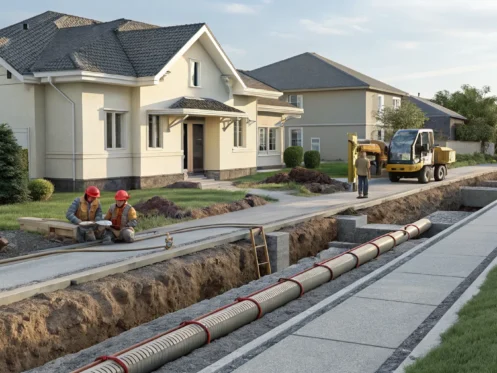
Let’s get straight to the point: you need to know the trenchless sewer line replacement cost. While there’s no single, one-size-fits-all answer, you deserve a clear understanding of what goes into the final number on your estimate. The price isn’t arbitrary; it’s calculated based on specific details like the length of the damaged pipe, its depth underground, the material it’s made from, and the overall complexity of the job. This guide is designed to demystify the process. We will break down each of these cost factors, explain the difference between pipe lining and pipe bursting, and give you the knowledge you need to feel confident when reviewing a quote for your Tucson home.
Key Takeaways
- Preserve your yard with trenchless repair: This modern solution fixes sewer lines from the inside out, using only one or two small access points. It delivers a powerful repair without the destructive and costly process of digging up your lawn, patio, or driveway.
- Understand the total investment, not just the quote: Traditional sewer repair comes with expensive secondary costs like rebuilding your landscape and hardscaping. Trenchless methods prevent this extra expense, making the quoted price a more accurate reflection of your final, all-in cost.
- Invest in a long-term solution: Modern trenchless repairs use durable, seamless liners with a 50-year lifespan that resist root intrusion and corrosion. To ensure this longevity, always choose a licensed and experienced professional who provides a clear, itemized quote and a strong warranty.
What Is Trenchless Sewer Line Replacement?
When you hear “sewer line replacement,” you probably picture a giant trench dug across your beautiful lawn, destroying years of landscaping work. For a long time, that was the only way to handle a major sewer issue. Thankfully, there’s a much smarter, less destructive solution now: trenchless sewer line replacement. Think of it as minimally invasive surgery for your home’s plumbing system. Instead of excavating your entire yard to access the damaged pipe, this modern method allows professionals to repair or replace your drains and sewer lines from the inside out.
This process typically requires only one or two small, strategically placed access points. From there, technicians can address a whole range of problems, from cracks and corrosion in old cast iron pipes to blockages caused by invasive tree roots. It’s an incredibly efficient and effective way to get a brand-new, durable sewer line without the massive disruption and costly landscape restoration that comes with traditional digging. For homeowners in Tucson, Oro Valley, and Sahuarita, it’s become the go-to choice for a long-lasting fix that preserves your property’s value and your peace of mind.
Pipe Lining vs. Pipe Bursting: The Two Main Methods
Trenchless repair isn’t a one-size-fits-all solution; it primarily involves two distinct methods. The first is pipe lining, often called Cured-in-Place Pipe (CIPP). A flexible, resin-coated tube is inserted into your existing sewer line and inflated, pressing the resin against the old pipe’s interior. Once the resin cures, it hardens into a brand-new, seamless pipe right inside the old one. The second method is pipe bursting. This technique is used when the original pipe is too collapsed or damaged for lining. A new pipe is pulled through the old one while a “bursting head” fractures the old pipe outward, making space. Both are excellent for older clay or cast iron pipes common in our area.
Why a Camera Inspection Is Always Step One
So, how do we know which method is right for your home? It all starts with a camera inspection. Before any work begins, a technician will feed a specialized, high-resolution camera through your sewer line. This gives us a clear, real-time view of what’s happening underground without any digging. We can pinpoint the exact location of cracks, root intrusion, or collapses. The inspection also tells us the type of pipe material and its overall condition. This step is non-negotiable because it removes all the guesswork, allowing us to recommend the most effective solution and provide an accurate estimate. If you’re dealing with recurring drain issues, you can schedule an inspection online to get a definitive answer.
Breaking Down the Cost of Trenchless Sewer Repair
When you’re facing a major sewer line issue, the first question on your mind is usually, “How much is this going to cost?” While there’s no single price tag for trenchless sewer repair, understanding the factors that go into an estimate can help you feel more prepared. The final cost depends entirely on your home’s unique situation, from the length and depth of your pipes to the extent of the damage. Think of it less like buying a product off the shelf and more like a custom solution tailored to your property. We’ll walk through the key components of the cost so you know exactly what to expect when you get a quote.
Average Cost Per Foot for Trenchless Repair
Let’s talk numbers. Generally, you can expect trenchless sewer repair to cost between $60 and $250 per foot. For a typical single-family home in Tucson, this often translates to a total project cost of $6,000 to $12,000. Of course, this is just an average. A smaller, more straightforward job might only be around $3,000 to $4,000, while a complex project with extensive damage could reach $20,000. This range accounts for the specialized equipment, materials, and skilled technicians required to perform the repair without digging up your yard. It’s a significant investment, but one that protects your property and provides a long-lasting fix.
How Pipe Material and Condition Affect the Price
Not all pipes are created equal, and their current state plays a huge role in the final price. The material of your existing sewer line is a major factor. Older homes in areas like Oro Valley might have clay or cast iron pipes, which can be more challenging to work with than modern PVC. The condition of the pipe is just as important. A few simple cracks are one thing, but a line that has completely collapsed or is overrun with tree roots requires a more intensive repair process. Our technicians always start with a camera inspection to assess the length of the damaged section and determine the best approach for your specific drains and sewer system.
What to Expect in Your Project Estimate
When you get an estimate, it’s crucial to look at the big picture. While the upfront cost of trenchless repair might seem comparable to traditional digging, it often saves you money by eliminating secondary expenses. A traditional repair estimate won’t include the cost of re-sodding your lawn, repaving your driveway, or rebuilding a patio that had to be torn up. With trenchless methods, those costs disappear. Your project estimate should clearly outline the work being done on the pipe itself, giving you a complete and transparent view of the investment. To get a precise quote tailored to your home, you can always schedule an appointment online with our team.
What Key Factors Influence Your Final Price?
While an average cost per foot gives you a general idea, it’s not the whole story. Think of it as a starting point. The final price on your estimate will depend on the unique details of your property and the specific condition of your sewer line. Several key factors can cause the cost to go up or down, and understanding them will help you see exactly what you’re paying for.
Every home in Tucson is different, from the soil composition to the way the plumbing was originally installed. A straightforward repair under a small patch of grass will naturally cost less than a complex one running beneath a mature mesquite tree and a custom-paved driveway. Our job is to assess these variables accurately. We look at everything from the length and depth of the pipe to the layout of your yard to give you a precise, all-inclusive quote. This ensures there are no surprises and that the solution is perfectly tailored to your home’s needs.
Pipe Length, Depth, and Accessibility
The total length of the pipe that needs repair is one of the biggest factors in your final cost. A longer stretch of damaged pipe requires more materials and time, which is reflected in the price. Similarly, the depth of the pipe matters. Deeper pipes can be more challenging to access, even with trenchless methods. However, this is where trenchless technology really shines. For pipes that are especially deep or long, trenchless repair is often much more cost-effective than traditional excavation, which would require extensive and expensive digging. Accessibility to the drains and sewer line is the final piece of this puzzle; if the access points are easy to get to, the job will be simpler and more affordable.
Your Property’s Layout and Landscaping
One of the main reasons homeowners in Oro Valley and Sahuarita choose trenchless repair is to protect their property. Traditional sewer repair involves digging a long trench right through your yard, destroying lawns, flowerbeds, patios, and driveways in the process. The cost to repair that damage can add thousands to your final bill. Trenchless methods avoid this entirely by only requiring one or two small access holes. This preserves your landscaping and hardscaping, saving you the headache and expense of restoration. The complexity of your property’s layout will still play a role, but protecting your yard is a significant, built-in cost saving. It’s a key part of our residential plumbing philosophy: fix the problem without creating new ones.
Local Labor and Permit Fees in Tucson
Your final estimate will also include costs specific to our local area. This covers the expertise of our certified technicians who perform the work, as well as any permits required by the city of Tucson or Pima County. Different municipalities have their own regulations and fees for plumbing work, and we handle all the paperwork to ensure your project is fully compliant. Factors like clearing out tough clogs or tree roots before the repair can also influence labor time. A transparent, itemized quote from a trusted company will break down these costs for you. When you’re ready, you can schedule an inspection online, and we’ll provide a clear, upfront estimate with no hidden fees.
Trenchless vs. Traditional: A Cost Comparison
When you get a quote for sewer line repair, it’s easy to focus on the main number. But comparing trenchless and traditional methods isn’t just about the initial price tag. Traditional excavation, which involves digging a large trench across your property, comes with a whole host of secondary costs that aren’t always obvious at first glance. Trenchless repair, on the other hand, is a minimally invasive process that saves your yard, your driveway, and your sanity. To really understand the financial picture, you have to look beyond the plumbing work and consider the total cost of restoring your property to its original condition. Let’s break down how these two approaches stack up financially.
Upfront Costs vs. Long-Term Value
When you place quotes side-by-side, the upfront cost for trenchless repair might look comparable to traditional digging. However, the real savings with trenchless technology come from what you don’t have to pay for later. Trenchless methods eliminate the massive expense of repairing your property after the work is done. Think about it: no need to re-sod your entire lawn, rebuild a retaining wall, or re-pour a concrete patio. The price you’re quoted for a trenchless sewer line service is much closer to the final, all-in cost. It’s about investing in a solution that respects your property and prevents a cascade of expensive restoration projects down the line.
The Hidden Costs of Excavation
The biggest financial shock with traditional sewer repair often comes after the plumbers have packed up. The “hidden costs” of excavation can be staggering. Restoring a torn-up yard, including landscaping and sprinkler systems, can easily add thousands of dollars to your final bill. If the sewer line runs under your driveway or a custom stone walkway, you’re looking at even more significant expenses for demolition and reconstruction. These restoration costs can sometimes double the initial price of the plumbing work itself. With traditional methods, you’re not just paying for a new pipe; you’re paying to rebuild a section of your property from the ground up.
Why Trenchless Often Saves You Money in the Long Run
Beyond avoiding landscape destruction, trenchless repair often proves more cost-effective for several reasons. For pipes that are located deep underground or run for a long distance, trenchless methods are significantly more efficient and affordable than extensive digging. The materials used in modern pipe lining are also incredibly durable, often lasting 50 years or more. This longevity means you’re less likely to face another major repair anytime soon, saving you money over the decades. When you factor in the speed of the repair and the lasting quality of the fix, it’s clear why so many homeowners in Tucson and Marana find trenchless solutions to be the smarter long-term investment. Ready to see the difference? You can schedule an inspection online today.
Is Trenchless Sewer Repair a Permanent Fix?
When you’re dealing with a major sewer line problem, the last thing you want is a temporary patch. You want a real, long-term solution. The great news is that trenchless sewer repair is designed to be exactly that: a permanent fix. Unlike traditional methods that might just replace one section of a failing pipe, trenchless techniques create a brand-new, seamless pipe inside the old one. This modern approach addresses the immediate issue and also reinforces the entire line against future problems.
Because this method involves minimal digging, it not only protects your yard and driveway but also results in a more durable and resilient pipe. The materials used are engineered to resist the very things that cause old pipes to fail, like corrosion, cracks, and root intrusion. By choosing a trenchless solution for your drains and sewer lines, you’re not just fixing a backup; you’re making a significant, long-lasting investment in the health and integrity of your home’s plumbing system. It’s a modern solution built for decades of reliability.
The 50-Year Lifespan of Modern Pipe Liners
One of the biggest reasons trenchless repair is considered a permanent solution comes down to the advanced materials used. The epoxy-resin liners used in methods like Cured-in-Place Pipe (CIPP) are incredibly strong and built to last. Industry studies show that these modern pipe liners have a life expectancy of 30 to 50 years, with many CIPP systems specifically designed to last even longer.
Think about that for a moment. A single repair can give you half a century of peace of mind. This new liner is corrosion-proof and leak-proof, creating a smooth, jointless pipe that essentially replaces your old, damaged one from the inside. It’s a far cry from older materials like clay or cast iron, which can become brittle and develop cracks over time.
How to Prevent Future Root Intrusion and Leaks
Tree roots are a classic enemy of sewer lines. They instinctively seek out water sources, and even a tiny crack or loose joint in an old pipe is an open invitation. Trenchless repair effectively solves this problem by creating a seamless, impenetrable barrier. With no joints or cracks for roots to exploit, the new liner makes it extremely difficult for them to get inside your sewer line. This single feature drastically reduces the risk of future blockages and leaks.
While the new pipe liner is incredibly durable, staying proactive is always a good idea. Regular maintenance can help you spot potential issues throughout your plumbing system before they become major headaches. A comprehensive maintenance agreement can ensure your entire system, including your sewer line, is in top shape year after year.
How to Plan for the Cost of Sewer Repair
A major sewer repair is a significant investment in your home, and the final price tag can feel daunting. But you don’t have to face it without a plan. Understanding what goes into the cost, exploring payment options, and knowing what to ask your insurance agent can make the entire process feel much more manageable. By taking a few proactive steps, you can move forward with confidence, knowing you’re making a smart, informed decision for your property. Here’s how you can prepare for the expense and ensure there are no surprises along the way.
Why You Need an Itemized Quote
Before you agree to any work, always ask for a detailed, itemized quote. This document is more than just a final number; it’s a transparent breakdown of every charge, from labor and materials to permits. The total cost of a trenchless repair depends on several factors, including the length and depth of the damaged pipe, the type of pipe material, and how easy it is to access. A professional quote should account for all these variables. For a project of this size, it’s also wise to get a second opinion. This helps you compare solutions and ensures you’re getting a fair price for the drains and sewer services you need.
Reviewing Your Financing Options
Let’s be honest, a sewer line replacement is rarely a planned expense. If the upfront cost is a concern, ask about financing. Many professional plumbing companies offer flexible payment plans that allow you to break down the total cost into manageable monthly installments. This can make an urgent repair possible without draining your savings. While trenchless methods can sometimes have a higher initial price than traditional digging, they provide incredible long-term value by preserving your landscaping, driveway, and patio. Financing makes it easier to choose the best permanent solution for your home instead of a temporary, less effective fix. You can always schedule an appointment to discuss your options.
Will Your Homeowner’s Insurance Cover It?
This is one of the first questions homeowners ask, and it’s an important one. Unfortunately, standard homeowner’s insurance policies usually do not cover sewer line damage caused by wear and tear, tree root intrusion, or poor maintenance. However, don’t assume you have no coverage without checking first. Some policies offer optional add-ons, often called “service line coverage,” that can help pay for repairs to underground pipes. The best course of action is to call your insurance agent directly. Pull out your policy, ask them to review your specific coverage, and find out exactly what is and isn’t included for residential plumbing emergencies.
How to Choose the Right Trenchless Professional
Choosing a contractor for your trenchless sewer repair is a big decision. This isn’t a simple fix; it’s a major investment in your home’s infrastructure. The right team will solve your immediate problem and give you peace of mind for decades, while the wrong one can lead to costly mistakes. To make sure you’re hiring a true expert, you need to do a little homework. It’s all about finding a qualified, experienced, and transparent professional who stands behind their work. Taking the time to vet your options ensures your project is handled correctly.
What to Look for in a Qualified Contractor
First, confirm that any contractor you consider is fully licensed and insured to perform drains and sewer work in Arizona. This is your baseline protection. Beyond that, look for a company with specific, proven experience in trenchless methods, as general plumbing skills don’t always translate. A seasoned trenchless technician will understand the unique challenges of Tucson’s soil and home layouts. You can gauge their expertise by reading online reviews and testimonials from previous clients. Look for patterns in the feedback that highlight reliability, professionalism, and high-quality results.
Key Questions to Ask Before You Hire
Once you have a shortlist, it’s time to ask some direct questions. A reputable company will be happy to provide clear answers. Don’t hesitate to ask:
- How many trenchless sewer repairs have you completed in the Tucson area?
- Can you provide references from recent, similar projects?
- What trenchless method do you recommend for my situation, and why?
- What does your warranty cover, and for how long?
- Will you provide a detailed, itemized quote?
Getting answers helps you compare options and feel confident in your decision. When you’re ready, you can schedule an appointment to have a professional assess your property.
What to Know About Warranties and Guarantees
A solid warranty is a contractor’s promise that they stand behind their work and materials. When discussing warranties, get into the details. A quality guarantee should cover both the materials, like the new pipe liner, and the labor for the installation. Ask about the duration of the warranty, as many modern trenchless repairs are designed to last up to 50 years. It’s also smart to find out if the warranty is transferable to a new owner. A transferable warranty can be a great selling point if you decide to move in the future.
Related Articles
- Sewer Line Replacement Cost Per Foot: A Full Guide
- What’s the Cost to Replace 50 Feet of Sewer Line?
- Sewer Camera Inspection Cost: What to Expect
- How Much Does Pipe Bursting Sewer Line Replacement Cost?
Frequently Asked Questions
How long does a trenchless sewer repair usually take? One of the best parts of trenchless repair is its efficiency. While every project is different, most residential jobs can be completed in just one or two days. This is a huge difference from traditional excavation, which can disrupt your home and yard for a week or more. The initial camera inspection helps us plan the job precisely, so our team can work quickly to get your plumbing back to normal with minimal downtime.
Can trenchless repair fix any type of sewer line damage? Trenchless technology is incredibly versatile and can solve most common sewer line problems, including cracks, leaks, corrosion, and severe root intrusion. For pipes that are still structurally sound, pipe lining is a perfect solution. If a pipe has completely collapsed or is severely broken, the pipe bursting method can be used to fracture the old pipe and pull a new one into place. A camera inspection is the only way to know for sure which method is right for your home.
Will I need to move out of my house during the repair? No, you can absolutely stay in your home. Because the work is done outside through small access points, the disruption to your daily life is minimal. We may need you to limit your water usage for a few hours while the new pipe liner cures or the new pipe is installed, but we will communicate the timeline clearly with you. You won’t have to deal with a giant trench or construction crews inside your house.
Is the process noisy or disruptive? Compared to the noise of a backhoe digging up your yard for days, trenchless repair is relatively quiet. You might hear some equipment running near the access points, but it’s far less intrusive than a full-scale excavation project. Our goal is to fix your sewer line with as little impact on your property and your peace as possible.
How do I know if pipe lining or pipe bursting is the right choice for my home? You don’t have to figure that out on your own; that’s our job. The decision depends entirely on the condition of your existing pipe, which we determine with a high-resolution camera inspection. If your pipe is mostly intact but has cracks or root damage, pipe lining creates a new, durable pipe inside the old one. If the original pipe is too collapsed or damaged to be lined, pipe bursting is the better option to replace it completely.