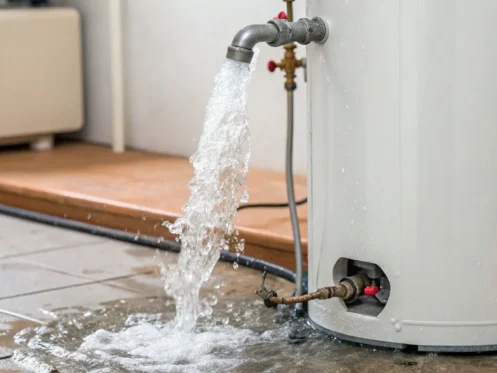
That small pipe on your water heater has a big job: it’s a safety release valve designed to protect your home. So, when you discover your hot water heater leaking from overflow pipe, it’s understandable to feel a little stressed. But before you panic, know that the pipe is actually doing what it’s supposed to do. It’s venting excess pressure or heat from inside the tank. The real question is why that pressure is too high in the first place. From simple thermostat issues to high water pressure in your Tucson home, we’ll cover the common causes and help you figure out what to do next.
Key Takeaways
- The overflow pipe is a safety feature, not a drain: A leak from this pipe means the Temperature and Pressure (T&P) valve is doing its job by releasing water to prevent dangerous pressure or temperature inside the tank, signaling a deeper problem.
- Prioritize safety before you investigate: If you see a leak, your first steps should always be to shut off the power (or gas) to the unit and then turn off the cold water supply valve to prevent further water damage.
- Look beyond the valve for a permanent solution: While a faulty valve can be the culprit, a persistent leak often points to high water pressure in your home or sediment buildup in the tank, issues that require professional diagnosis and regular maintenance to solve for good.
What’s That Pipe on Your Water Heater?
If you’ve ever looked at your water heater, you’ve probably noticed a pipe sticking out from the top or side, often leading down toward the floor. It might seem out of place, but this isn’t just a spare part. This pipe is connected to a critical safety device on your water heater, and understanding its purpose is the first step to figuring out why it might be leaking. Let’s break down what it does and why it’s so important for your home’s safety in Tucson.
Understanding Its Role as a Safety Feature
That pipe is connected to something called the Temperature and Pressure (T&P) relief valve. Think of this valve as your water heater’s emergency release. Its one and only job is to protect the tank from dangerously high pressure or temperature. If conditions inside the tank get too extreme, the T&P valve opens automatically to let some water out, relieving the stress. So, if you see water coming from the overflow pipe, the valve is actually doing its job. However, it also means there’s an underlying issue causing that excess pressure or heat, which is a clear signal that your water heater needs attention.
How the T&P Relief Valve Works
The mechanics are pretty straightforward. Inside the T&P valve, a spring holds a seal in place. When the temperature inside the tank climbs above 210°F or the pressure exceeds 150 psi (pounds per square inch), that force becomes strong enough to push the spring back. This opens the valve, allowing superheated water and steam to escape through the attached overflow pipe. This simple but vital action prevents the tank from turning into a high-pressure vessel with the potential to rupture. A constantly dripping valve indicates that the pressure or temperature is frequently hitting unsafe levels, and it’s time to find the root cause.
Why Is Your Water Heater Leaking From the Overflow Pipe?
Seeing water pool around your water heater can be alarming, but that overflow pipe is actually doing its job. It’s a safety feature called the Temperature and Pressure (T&P) relief valve, designed to release water when the temperature or pressure inside the tank gets dangerously high. A leak from this pipe is a clear signal that something isn’t right. Let’s walk through the most common reasons this happens so you can figure out your next steps.
Your Water Pressure Is Too High
Your home’s plumbing system is designed to operate within a specific pressure range. If the water pressure coming into your house is too high, typically above 80 psi, it can put constant strain on your pipes, appliances, and especially your water heater. This excessive force can push the T&P valve open, causing it to leak. This isn’t just a water heater problem; high pressure can damage your entire plumbing system over time. A professional plumber can test your home’s pressure and install a pressure-reducing valve to keep everything in a safe range.
The Water Is Overheating
Your water heater’s thermostat controls how hot the water gets inside the tank. For safety and efficiency, this is usually set between 120 and 140 degrees Fahrenheit. If the thermostat malfunctions and is set too high or fails, it can cause the water to overheat. When water gets too hot, it expands and creates a massive amount of pressure inside the tank. The T&P valve opens to release this dangerous pressure, resulting in a leak from the overflow pipe. This is a serious safety issue that requires immediate attention from a qualified technician.
The T&P Relief Valve Is Faulty
Like any mechanical part, the T&P valve itself can wear out and fail. Corrosion or mineral buildup can cause the valve to get stuck partially open or prevent it from sealing properly after it opens. In this case, the valve will drip continuously even if the pressure and temperature are normal. While replacing the valve might seem like a simple fix, it’s important to be sure the valve is the true cause. If a new valve continues to leak, it’s a strong indicator that you have an underlying pressure problem that needs to be addressed.
You’re Missing an Expansion Tank
When water heats up, it expands. This is a basic law of physics called thermal expansion. In a closed plumbing system, that expanded water has nowhere to go, causing a sharp spike in pressure inside your water heater tank. An expansion tank is a small secondary tank that connects to your water heater’s plumbing. It contains a bladder of compressed air that absorbs the excess water volume, stabilizing the pressure. If your system doesn’t have one, the T&P valve becomes the only release point for this pressure, leading to frequent leaks.
Sediment Has Built Up Inside
Over time, minerals like calcium and magnesium naturally present in the water supply can settle at the bottom of your water heater tank, forming a layer of sediment. This is especially common in areas with hard water. This buildup can cause several problems, including creating hot spots that make the water boil, which spikes the internal pressure. Sediment can also travel into the T&P valve, preventing it from closing completely. Regular maintenance, including flushing the tank, can prevent this issue and extend the life of your water heater.
Leaking Overflow Pipe? Here’s What to Do First
Seeing water leaking from your water heater is stressful, but don’t panic. That overflow pipe, officially known as the temperature and pressure (T&P) relief valve pipe, is a safety feature. A leak is its way of telling you something isn’t right inside the tank. Before you start playing detective to find the cause, there are a few immediate steps you need to take to keep your home and family safe. Let’s walk through them together.
Cut the Power or Gas
Your first priority is safety. To prevent the unit from overheating and creating a more dangerous situation, you need to cut its power source. For an electric water heater, head to your home’s main electrical panel and flip the circuit breaker that controls the unit. If you have a gas model, find the control knob or dial on the heater itself and turn it to the “OFF” position. This simple step ensures the unit won’t continue trying to heat water, which is crucial for preventing further pressure buildup.
Shut Off the Water Supply
Now that the power is off, you need to stop more water from flowing into the tank. Look for the cold water inlet pipe, which is typically located at the top of your water heater. You should see a handle or a circular knob-style valve on this pipe. Turn it clockwise until it stops to shut off the cold water supply. This action will stop feeding the leak and prevent a small drip from turning into a major puddle, which is a critical step to minimize potential water damage to your home in Tucson or Sahuarita.
Lower the Thermostat
Sometimes, the overflow pipe leaks because the water inside the tank is simply too hot, creating excess pressure that needs to be released. If you’ve noticed the water from your taps has been scalding hot lately, this could be the culprit. Find the thermostat dial on your water heater and turn it down. The ideal and safest temperature setting for most homes is 120°F. This is plenty hot for showers and dishes without posing a burn risk or putting unnecessary strain on your tank.
Check for Immediate Safety Hazards
With the unit and water supply shut off, take a final look around the area. Is water just dripping, or is it pouring out? If you have a constant flow, you’ve already done the right thing by shutting everything down. Check the floor for significant puddling, especially near any electrical outlets. If you have a gas heater, be alert for the distinct smell of rotten eggs, which indicates a gas leak. If you notice any of these serious hazards, your next step should be to call for professional residential plumbing help right away. You can schedule an appointment online with our team for a fast response.
How to Tell if Your Water Pressure Is Too High
High water pressure can feel like a luxury at the showerhead, but it’s often a hidden menace to your home’s entire plumbing system. When the pressure is too high, it puts constant stress on your pipes, fixtures, and appliances, including your water heater. This strain is a leading cause of a leaking T&P valve. Fortunately, you don’t have to be a plumbing expert to figure out if your water pressure is the problem. With a simple tool and a little observation, you can get a clear picture of what’s happening in your pipes.
Test It With a Pressure Gauge
This is the most accurate way to check your home’s water pressure. You can find an inexpensive water pressure gauge at any local hardware store. To get a reading, screw the gauge onto an outdoor hose bib or the cold water connection for your washing machine. Before you turn on the water, make sure every other faucet and water-using appliance in your house is off. This ensures you’re measuring the static pressure of your system. Once everything is off, turn the faucet on all the way. The needle on the gauge will show you your home’s water pressure in pounds per square inch (psi).
Know the Normal Pressure Range for Your Home
So, what’s a good number? For most homes, water pressure should be between 40 and 60 psi. While some systems can handle up to 80 psi, anything consistently above that level is too high and can cause serious damage over time. Think of it like blood pressure for your house; chronic high pressure wears everything out faster. It can lead to burst washing machine hoses, failing toilet fill valves, and leaks in your pipes and faucets. Protecting your residential plumbing system from this unnecessary strain can save you from surprise repairs and water damage down the road.
Spot Other High-Pressure Warning Signs
Your home often gives you clues that the water pressure is too high, even without a gauge. A frequently dripping T&P overflow pipe on your water heater is a major red flag, as the valve is opening to release excess pressure. You might also hear a loud banging or hammering sound in your pipes when you turn off a faucet or an appliance shuts off. Other signs include sputtering faucets, toilets that run intermittently, and appliance leaks. If you’re experiencing one or more of these issues, it’s a strong indicator that your water pressure needs to be addressed. If you’re seeing these signs, it’s best to have a professional take a look and schedule an appointment to get it sorted out.
DIY Troubleshooting Steps You Can Try
If you’re comfortable with a little hands-on work, there are a few things you can check before calling for backup. These steps can help you pinpoint the problem and sometimes even solve it yourself. Just remember to always prioritize safety: if you’re ever unsure or uncomfortable, it’s best to stop and contact a professional.
Test the T&P Valve’s Function
Your T&P valve has a small lever. To test it, carefully lift the lever for a few seconds. A small amount of hot water should come out of the overflow pipe. When you let go, the water flow should stop completely. If it keeps dripping or gushing after you release the lever, the valve’s internal seal is likely broken. On the other hand, if no water comes out at all, the valve might be stuck shut with mineral deposits. In either situation, the valve is faulty and needs to be replaced to keep your system safe.
Check and Adjust Your Thermostat
Sometimes the simplest fix is the right one. Take a look at your water heater’s thermostat setting. For most homes, the ideal temperature is 120°F. If yours is set much higher, it can cause the water to overheat, creating excess steam and pressure inside the tank. This pressure forces the T&P valve to open and release water. Try lowering the temperature to the recommended 120°F setting. This can not only solve the leak but also helps save on energy bills and reduces the risk of scalding.
Flush Sediment From the Tank
Over time, minerals from the water supply can settle at the bottom of your water heater tank. This layer of sediment can create hot spots, causing the water to boil and the pressure to spike. Flushing the tank can clear this out. To do this, turn off the power and water supply to the heater and let it cool. Then, attach a garden hose to the drain valve at the bottom. Open a hot water faucet somewhere in your house, then open the drain valve to let the water and sediment flow out. This is a key part of regular plumbing maintenance that can extend your unit’s life.
Inspect Pipe Connections for Leaks
Take a close look at all the pipe connections going into and out of your water heater. A small drip from a fitting can sometimes be mistaken for an overflow issue. If all the connections are dry and the T&P valve is still leaking (even after you’ve replaced it), the problem might be with your home’s overall water pressure. You can buy a simple water pressure gauge from a hardware store to test it at an outdoor spigot. If the reading is too high, it puts constant stress on your entire plumbing system, including the water heater’s safety valve.
When Should You Call a Professional?
While it’s great to be a hands-on homeowner, some situations are best left to the experts. A leaking overflow pipe can sometimes signal a deeper, more complex problem that requires professional tools and knowledge. If you’ve tried the basic troubleshooting steps or are facing a more serious symptom, it’s time to put down the wrench and pick up the phone. Ignoring these signs can lead to significant water damage or even create a dangerous situation for your household. Here are the clear indicators that you need to call a licensed plumber.
The Valve Won’t Stop Leaking
If the T&P valve is leaking continuously and won’t stop, treat it as an urgent issue. This isn’t a slow drip you can put a bucket under and forget about. A constant flow of water means the valve is doing its job to relieve extreme pressure or temperature, or the valve itself has failed completely. Your first move should be to shut off the cold water supply line to the tank. Next, turn off the power at the circuit breaker for an electric heater or shut off the gas supply for a gas model. Once you’ve secured the unit, it’s time to call for professional residential plumbing services.
You Smell Gas or See Burn Marks
This is the most critical red flag, and it requires immediate action. If you smell gas (a rotten egg scent) around your water heater or notice any soot or burn marks on the unit, you have an emergency. These signs point to a dangerous combustion problem that could lead to a fire or carbon monoxide leak. Do not try to fix this yourself. After shutting off the gas supply to the water heater, leave the area and call a professional immediately. Our team at Fusion Plumbing & Air offers 24/7 emergency services to handle these hazardous situations safely and quickly in Tucson, Marana, and the surrounding communities.
The Leak Persists After Troubleshooting
Let’s say you’ve already tried a few things. Maybe you tested the valve or even replaced it, but the overflow pipe is still leaking. This is a strong sign that the problem isn’t the valve itself but something bigger. Persistent leaking often points to excessive pressure throughout your home’s entire plumbing system. A professional plumber can accurately diagnose the root cause, which could involve installing a pressure-reducing valve or a thermal expansion tank. Continuing to replace parts without addressing the underlying issue won’t solve the problem and can put a strain on all your pipes and appliances.
You’re Unsure About the Cause
There is absolutely no shame in not knowing what’s wrong. Water heaters are complex, and your safety is the top priority. If you’ve gone through the basic checks and are still scratching your head, or if you simply don’t feel comfortable working on the unit, that’s your cue to call for help. A licensed technician has the training and diagnostic tools to pinpoint the exact cause of the leak efficiently. Making a guess can lead to more expensive repairs down the road. When in doubt, the smartest and safest decision is to schedule an appointment with a trusted professional.
How to Prevent Future Overflow Leaks
Once you’ve handled the immediate leak, your next thought is probably, “How can I keep this from happening again?” The good news is that a few proactive steps can go a long way in preventing future overflows. Taking care of your water heater isn’t just about avoiding puddles on the floor; it’s about ensuring your system runs safely and efficiently for years to come. Think of it as a little bit of prevention that saves you a lot of stress down the road.
Test the T&P Valve Regularly
A great habit to get into is testing your temperature and pressure (T&P) relief valve at least once a year. This simple check ensures the valve hasn’t become stuck and can do its job during a pressure spike. To test it, place a bucket under the overflow pipe and gently lift the lever on the valve. A burst of hot water should come out. If you get a weak trickle or no water at all, the valve is likely faulty and needs to be replaced. This is a straightforward task, but if you’re not comfortable with it, our team of Tucson plumbers can handle it for you.
Install a Pressure-Reducing Valve
If your home’s water pressure is consistently above 80 psi, it puts a constant strain on your entire plumbing system, including your water heater’s T&P valve. A pressure-reducing valve (PRV) is a smart solution that gets installed on your main water line to regulate the pressure entering your home. This not only protects your water heater but also extends the life of your pipes, faucets, and other appliances. Since this installation involves the main water supply, it’s a job best left to a professional. We can test your pressure and install a PRV to keep things in the safe zone.
Add a Thermal Expansion Tank
When water heats up, it expands. In a closed plumbing system, that expanded water has nowhere to go, causing a sharp increase in pressure that can trigger the T&P valve to open. A thermal expansion tank is a small tank that gets installed near your water heater to absorb this excess pressure. It acts like a shock absorber for your plumbing system, preventing unnecessary wear and tear on the T&P valve and the tank itself. If you don’t have one, especially in areas like Marana or Sahuarita with newer homes, it’s a worthwhile upgrade to schedule with a professional.
Maintain Proper Thermostat Settings
Your water heater’s thermostat is set by the manufacturer, but it’s always a good idea to check it. For most households, 120°F is the perfect balance of safety and performance. Setting it any higher not only increases your energy bill and the risk of scalding but also contributes to faster pressure buildup inside the tank. An excessively high temperature can cause the T&P valve to leak more frequently. You can usually find the temperature dial near the bottom of the tank. Make sure it’s set to 120°F or the “hot” setting, not “very hot.”
Schedule Annual Maintenance
The single best way to prevent leaks and extend the life of your water heater is with regular professional maintenance. During an annual service, a technician will flush sediment from the tank, inspect the anode rod (which prevents rust), test the T&P valve, and check for any signs of wear or potential leaks. This routine check-up catches small problems before they become big, expensive emergencies. Our maintenance agreement makes it easy to stay on top of this essential task, giving you peace of mind that your system is in top shape.
Should You Repair or Replace Your Water Heater?
A leaking overflow pipe doesn’t always mean your water heater is done for, but it’s a good time to evaluate its overall health. When you’re facing a repair, it’s smart to pause and ask whether that money would be better invested in a brand-new unit. The decision to repair or replace depends on a few key factors: the age of your current heater, the cost of the fix, and the benefits a new model can offer. Thinking through these points will help you make a confident choice for your home and your budget.
Consider Its Age and Efficiency
Most traditional tank water heaters have a lifespan of about 8 to 12 years. If yours is approaching the decade mark or has already passed it, replacement often makes more sense. As water heaters age, they become less energy-efficient, working harder and using more power to heat the same amount of water. This means you’re likely paying more on your utility bills each month. When an older unit starts needing repairs, you’re putting money into a machine that’s already on its way out. Investing in a new, high-efficiency model can lower your energy costs and give you reliable hot water for years to come.
Compare the Cost of Repair vs. Replacement
It’s tempting to go with the cheaper option upfront, but it’s important to look at the long-term costs. A good rule of thumb is the 50% rule: if the cost of a repair is half or more of the price of a new water heater, replacement is the better financial decision. While a new unit is a bigger initial investment, it saves you from the cycle of paying for one repair after another on an aging system. Before you decide, it’s a great idea to get a professional quote. Our team can assess your current unit and give you clear pricing for both water heater repair and replacement options.
Think About Modern Safety Upgrades
Technology has come a long way, and today’s water heaters are built with features that older models simply don’t have. Upgrading to a new unit means you’re also getting the latest safety enhancements, which can protect your home from water damage and other potential hazards. Newer models also offer better performance and greater reliability, so you won’t have to worry about unexpected breakdowns. Plus, a new water heater comes with a manufacturer’s warranty, giving you peace of mind. To keep any unit running safely and efficiently, consider a maintenance agreement for regular professional check-ups.
Related Articles
- Water Heater Leaking? Your Step-by-Step Guide
- Leaking Water Heater? An Emergency Step-by-Step Guide
- Electric Water Heater Leaking From Bottom? What to Do
- Water Heater Leaking? Here’s What to Do Right Now
Frequently Asked Questions
Is a small drip from the overflow pipe a big deal? Yes, you should always take it seriously. While a slow drip might not seem like an emergency, it’s your water heater’s way of telling you that something is wrong inside. The pipe is connected to a safety valve that only releases water when the temperature or pressure is too high. Ignoring it could lead to a bigger leak, water damage, or a more serious failure of the unit itself.
Can I just replace the leaky valve myself to fix the problem? Replacing the T&P valve might seem like a quick fix, but it often only addresses the symptom, not the cause. If the valve is leaking because your home’s water pressure is too high or the tank is overheating, a new valve will just start leaking, too. It’s better to figure out the root cause first to ensure the problem is actually solved and your system is safe.
What is an expansion tank and why would I need one? An expansion tank is a small, separate tank that attaches to your water heater’s plumbing. When water heats up, it expands, and this tank acts like a shock absorber, giving that extra water volume a place to go. Without one, the pressure builds up inside your water heater, forcing the T&P valve to open. If your valve leaks frequently, a missing expansion tank is a very likely culprit.
How do I know if it’s better to repair the leak or replace my whole water heater? A good way to decide is to consider the unit’s age and the cost of the repair. Most tank water heaters last about 8 to 12 years. If yours is in that range or older, investing in a new, more efficient model is often the smarter financial move. A helpful guideline is the 50% rule: if the repair costs half as much as a new unit, replacement is usually the better long-term solution.
Besides fixing the leak, what’s the best way to take care of my water heater? The most effective thing you can do is schedule annual professional maintenance. A technician can flush out sediment buildup, which is a common cause of overheating and pressure issues. They will also test the safety valve, check the anode rod that prevents rust, and make sure everything is working correctly. This yearly check-up can prevent future leaks and significantly extend the life of your water heater.