
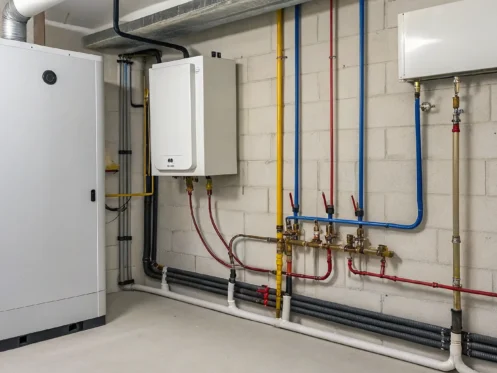
If you’ve ever looked at the bulky furnace and towering water heater taking up prime real estate in your garage or utility closet, you’ve probably wondered if there’s a better way. These two essential appliances work hard, but they aren’t exactly elegant or efficient. A modern solution combines both jobs into one sleek, wall-mounted unit. This system, often called a combi-boiler, is a high-efficiency tankless water heater furnace combo that provides both space heating and an endless supply of hot water on demand. For homeowners in Tucson looking to streamline their home’s systems, save space, and upgrade to smarter technology, this all-in-one approach is a game-changer.
Key Takeaways
- Combine for Efficiency and Space: A combi-boiler replaces both your furnace and water heater with a single, compact unit, saving valuable floor space and improving energy efficiency by heating water only when you need it.
- Balance Benefits with Your Needs: While you gain an endless supply of hot water, these systems have a limited flow rate, making them perfect for most homes but potentially challenging for large households that run multiple showers and appliances at once.
- Rely on Professional Sizing and Installation: Choosing the right combi-boiler requires a professional to calculate your home’s specific hot water demand; correct installation, which often includes utility upgrades, is critical for safety and performance.
What Is a Tankless Water Heater and Furnace Combo?
If you’re looking to streamline your home’s essential systems, a tankless water heater and furnace combo might be the perfect solution. Often called a “combi-boiler,” this is a single, high-efficiency unit designed to handle two major jobs: providing hot water for your taps and showers, and delivering warm air to keep your home comfortable. Instead of having a bulky, separate furnace and a large water heater tank taking up valuable space in your garage or closet, a combi-boiler combines both functions into one compact, wall-mounted appliance.
These systems work on-demand, meaning they only heat water when you need it. This is a major shift from traditional water heaters that constantly burn energy to keep a large tank of water hot, just in case you need it. By heating water instantly, combi-boilers offer significant energy savings and the amazing perk of a seemingly endless supply of hot water. For homeowners in Tucson, Marana, and Sahuarita looking to upgrade their home’s efficiency and free up some floor space, understanding how these innovative systems provide both heating services and hot water is the first step toward a more modern and cost-effective setup. It’s an all-in-one approach that simplifies maintenance and can potentially lower your utility bills over the long run.
How a Combi-Boiler Works
The magic of a combi-boiler lies in its ability to prioritize tasks. When you turn on a hot water faucet, the system immediately detects the water flow. It fires up a powerful, yet efficient, gas burner that heats the water as it passes through a dedicated heat exchanger, sending it directly to your tap.
The system is smart enough to always prioritize your domestic hot water needs. So, if the heat is running and you decide to take a shower, the unit will temporarily pause sending heat to your home’s air handler and divert all its power to make sure your shower is hot. Once you turn the faucet off, it seamlessly switches back to space heating. This ensures you get instant hot water without compromising your home’s overall comfort.
Key Parts of a Combi-Boiler
While the technology is advanced, the core components of a combi-boiler are straightforward. The entire system is housed in a compact, wall-mounted cabinet, which is a huge space-saver. Inside, you’ll find two separate heat exchangers: one for your home’s hot water supply and another for the central heating system.
Quality is key, which is why top models are built with durable stainless steel parts that resist rust and corrosion, helping them last much longer than traditional units. A sophisticated electronic control unit acts as the brain, managing ignition, water temperature, and flow rates to ensure everything runs safely and efficiently. This combination of smart technology and robust construction is what makes a combi-boiler a reliable source for all your residential plumbing and heating needs.
How Do Combi-Boiler Systems Work?
It might sound complex, but the way a combi-boiler system works is actually quite clever and straightforward. Think of it as a smart, two-in-one appliance that handles both your home’s heating and its hot water from a single, compact unit. Instead of having a separate furnace and a bulky water heater tank, a combi-boiler does both jobs on demand. When you need hot water, it heats it instantly. When your home needs warmth, it provides that too.
The system operates by using a powerful and efficient heat exchanger. Water is heated as it passes through this component, and from there, it’s directed wherever it’s needed. If you turn on a hot water tap, the water goes there. If the thermostat calls for heat, the hot water is sent to a special coil that helps warm the air for your home. This dual-purpose design is what makes it so efficient. It only uses energy when there’s an active need for hot water or heat, which is a major upgrade from traditional systems that constantly work to keep a large tank of water hot. It’s a modern approach to home comfort that streamlines two of your biggest energy consumers into one seamless operation.
The On-Demand Hot Water Process
The magic of a combi-boiler is its ability to provide hot water the moment you need it. When you turn on a shower or a hot water faucet, a sensor inside the unit detects the water flow. This immediately triggers the high-efficiency burner to fire up and heat the water as it passes through the primary heat exchanger. The hot water is then sent directly to your faucet, so you don’t have to wait for a tank to refill.
This process is incredibly efficient because the unit only works when you demand hot water. It’s a core part of our residential plumbing philosophy: provide effective solutions that don’t waste resources. Because the system prioritizes domestic hot water, it will even pause space heating to make sure your shower stays perfectly warm.
How It Heats Your Home
Heating your home with a combi-boiler works a little differently than a traditional furnace, but it’s just as effective. Instead of using a flame to directly heat the air, the system uses hot water in a process called hydronic heating. The combi-boiler heats a circuit of water and sends it to a hydronic coil, which is typically located in your air handler.
Your system’s fan then blows air across the hot fins of the coil. The air picks up the heat and is then distributed throughout your home via your existing ductwork, just like a standard furnace. This method provides a consistent and comfortable warmth. Our expert heating services team can help determine if this setup is the right fit for your home’s specific needs in Tucson or the surrounding communities.
Switching Between Heating Water and Air
So, what happens when you need to run the dishwasher while the heat is on? A combi-boiler is designed to handle both tasks, but it does so by prioritizing one at a time. Its default priority is always providing domestic hot water for your taps and showers.
If your heat is running and you turn on the hot water, the system will momentarily pause sending hot water to the heating coil and divert all its power to heating the water for your faucet. The switch is instantaneous, so you’ll never notice a change. Once you turn the faucet off, the system seamlessly switches back to heating your home. This ensures you get an uninterrupted stream of hot water without ever sacrificing the warmth and comfort of your living space.
The Biggest Benefits of a Combi-Boiler System
If you’re looking for a system that works smarter, not harder, a combi-boiler might be the perfect fit for your home. By combining your home’s heating and hot water production into a single, high-efficiency unit, these systems offer some pretty impressive advantages over traditional setups. From saving space to cutting down on your energy bills, a combi-boiler is a modern solution that delivers comfort and convenience. Let’s look at the key benefits you can expect when you upgrade your home’s heating services.
Enjoy an Endless Hot Water Supply
We’ve all been there: you’re the last one in the family to shower, and the hot water runs out halfway through. With a combi-boiler, that becomes a thing of the past. Unlike traditional systems that store a limited amount of hot water in a large tank, a combi-boiler heats water on demand. Whenever you turn on a hot water tap, the system fires up and heats the water instantly. This means you get a continuous, endless supply of hot water for as long as you need it. You can run the dishwasher, do a load of laundry, and still enjoy a long, hot shower without worrying about it turning cold.
Save Space with a Compact Design
Traditional HVAC systems can be bulky. You usually have a large furnace and a separate, towering water heater tank taking up valuable real estate in your garage, closet, or utility room. A combi-boiler changes all that. These units are incredibly compact and are typically mounted on a wall, freeing up significant floor space. Imagine what you could do with that extra room: more storage, a small workspace, or just a cleaner, more organized area. This space-saving design is a huge plus, especially for smaller homes or anyone looking to declutter and maximize their living space.
Improve Your Home’s Energy Efficiency
One of the most significant advantages of a combi-boiler is its incredible energy efficiency. Most modern combi-boilers are ENERGY STAR certified, with an Annual Fuel Utilization Efficiency (AFUE) rating of around 95%. This means that 95% of the fuel consumed is converted directly into heat for your home and water, with very little waste. Because the system only heats water when you need it, you eliminate the standby heat loss that occurs when a traditional tank constantly reheats its water supply. Over time, this efficiency translates into noticeable savings on your monthly utility bills.
Get a Longer Lifespan from One Unit
Investing in your home’s heating and cooling system is a big decision, so you want equipment that lasts. Combi-boilers are built to go the distance. While a traditional tank water heater typically lasts between 10 and 15 years, a well-maintained combi-boiler can have a lifespan of 20 years or more. This longevity means you won’t have to worry about a costly replacement anytime soon. By choosing a durable, high-quality system and keeping up with routine service through a maintenance agreement, you’re making a smart, long-term investment in your home’s comfort and value.
Potential Downsides of a Combi-Boiler System
As much as I love the efficiency and space-saving perks of a combi-boiler, it’s important to look at the full picture. These systems are a fantastic solution for many homes in Tucson, but they aren’t a one-size-fits-all answer. A few factors could make a different type of system a better fit for your family’s needs. Thinking through these potential drawbacks ahead of time ensures you’ll be happy with your choice for years to come. Let’s walk through the main considerations.
Understanding Hot Water Flow Limitations
While combi-boilers provide endless hot water, they don’t provide an unlimited amount at the same time. The system’s output is measured by its flow rate, which is typically between two and five gallons per minute. This is plenty for one task, like running a shower or a dishwasher. However, if you have a large family and often have two showers running at once, you might find the water pressure drops or the temperature fluctuates. For households with high simultaneous hot water demands, you may need to invest in a larger, more powerful unit to keep up.
Higher Initial Investment
There’s no getting around it: the upfront cost of a combi-boiler is higher than a traditional furnace and water heater setup. The installation is more complex and often requires specialized venting and potential upgrades to your existing gas lines to handle the unit’s demands. This isn’t a simple swap. It’s a significant upgrade to your home’s mechanical systems, and the price reflects that. While you’ll see savings on your utility bills over time, the initial investment is something you’ll need to budget for. Our team can always provide a clear estimate for your specific home’s heating services.
Maintenance Needs and the “Cold Water Sandwich”
Like any high-efficiency appliance, a combi-boiler needs regular care to perform its best. Because of the hard water we have here in Oro Valley and the surrounding areas, these units require professional descaling every one to two years to prevent mineral buildup. Skipping this step can reduce efficiency and shorten the unit’s lifespan. We include this service as part of our maintenance agreement to make it easy. You might also experience the “cold water sandwich,” a brief burst of cold water when you quickly turn a tap off and on again. It’s a minor quirk of tankless technology, but it’s good to know about.
Which Brands Make the Best Combi-Boilers?
When you’re investing in a major home appliance like a combi-boiler, the brand name really does matter. You want a system that’s reliable, efficient, and built to last. Over the years, our team at Fusion Plumbing & Air has installed and serviced countless units across Tucson, Oro Valley, and Marana. That hands-on experience has shown us which brands consistently deliver on their promises and which ones fall short.
While there are many options on the market, a few names consistently rise to the top for their innovation, performance, and durability. We find ourselves recommending Navien, Rheem, and Rinnai more than any others. These manufacturers have a proven track record of building high-quality systems that stand up to the demands of a busy household. They are leaders in energy efficiency, which means lower utility bills for you, and they offer robust warranties that provide peace of mind. Choosing a trusted brand is the first step toward ensuring your new combi-boiler is a smart, long-term investment for your home.
Models We Recommend
When customers ask us for recommendations, we don’t just point to the flashiest model. We suggest brands that we trust to perform reliably in homes just like yours. Based on our extensive experience with installations and repairs, we consistently stand by three industry leaders: Navien, Rheem, and Rinnai. Each of these brands offers something a little different, but they all share a commitment to quality engineering, energy efficiency, and customer satisfaction. We’ve seen firsthand how well these units perform, and we’re confident in recommending them to our clients throughout the Tucson area. Let’s look at what makes each one a solid choice.
Navien Combi-Boiler Systems
Navien has earned its spot as the number-one selling combi-boiler brand in North America, and for good reason. These systems are incredibly energy-efficient, boasting a 95% AFUE rating. This means 95 cents of every dollar you spend on fuel directly contributes to your home’s heating services, which is great for both your wallet and the environment. Navien units are also compact and wall-mounted, freeing up valuable floor space compared to traditional boiler and water heater setups. They deliver an impressive flow of hot water, ensuring you can run a shower and a dishwasher at the same time without any issues.
Rheem and Rinnai Options
Rheem and Rinnai are two other fantastic brands that we confidently install. Rheem offers a powerful combi-boiler that is an excellent fit for small to medium-sized homes, providing both endless hot water and reliable home heating in one efficient package. Rinnai has built a stellar reputation among industry professionals, which is always a great sign. When plumbers and HVAC technicians trust a brand for their own projects, you know it’s built to last. Both companies are known for their durable products and commitment to innovation. If you’d like to discuss which model is the perfect match for your home, you can schedule an online consultation with one of our experts.
What Features Should You Look for in a Quality System?
Once you start looking at specific combi-boiler models, you’ll notice a lot of different specs and features. It can feel a bit overwhelming, but focusing on a few key areas will help you compare systems and find the perfect fit for your home. Think about how you use hot water and heat daily, and then look for a unit that matches your lifestyle. A quality system should be efficient, powerful enough for your household, and equipped with modern technology that makes your life easier and safer. Let’s break down the most important features to keep an eye on.
Check the Efficiency Ratings
One of the first things you should look for is the system’s efficiency rating. This tells you how much of the fuel it consumes is actually converted into heat for your home and water. Look for the Annual Fuel Utilization Efficiency (AFUE) percentage; the higher the number, the more efficient the unit. Many top-tier combi-boilers are Energy Star certified, which means they meet strict efficiency guidelines set by the EPA. For example, some Navien models have a 95% AFUE rating, meaning 95 cents of every dollar you spend on fuel goes directly to heating. A high-efficiency unit is a smart investment that lowers your monthly utility bills and reduces your home’s carbon footprint.
Match the Flow Rate to Your Needs
Next, consider the hot water flow rate, measured in gallons per minute (GPM). This determines how much hot water the unit can supply at one time. A typical tankless system provides between two and five GPM. To figure out what you need, think about your family’s habits. Do you often have the shower running at the same time as the dishwasher or washing machine? If you have a large family or frequently use multiple hot water appliances simultaneously, you’ll need a system with a higher GPM. The Department of Energy notes that for some high-demand households, a single unit might not be enough, so it’s crucial to size your system correctly from the start.
Look for Smart Tech and Safety Features
Modern combi-boilers often come with features that add convenience and peace of mind. Many systems now include Wi-Fi connectivity, allowing you to control your home’s temperature and hot water settings directly from your smartphone, whether you’re on the couch or away on vacation. Safety is another huge upgrade. Unlike older, natural draft water heaters that can pose a carbon monoxide risk, combi-boilers use a sealed combustion system that vents directly outside. This design significantly improves the safety of your home’s heating system. Choosing a unit with these advanced safety and tech features ensures your system is not only efficient but also safe and easy to manage.
How to Choose the Right Combi-Boiler
Picking the right combi-boiler isn’t as simple as grabbing one off the shelf. Since this single unit will handle both your heating and hot water, it’s important to find a model that perfectly matches your home and lifestyle. Thinking through your family’s needs, your home’s existing setup, and even our local climate will help you land on a system that keeps you comfortable for years. Let’s walk through the key factors to consider so you can make a confident choice.
Calculate Your Home’s Hot Water Demand
A combi-boiler heats water as you need it, so the most important factor is its flow rate, measured in gallons per minute (GPM). Most units provide between two and five GPM. To figure out what you need, think about your busiest moments. Do you often have a shower running while the dishwasher is on? A typical shower uses about 2 GPM, and a dishwasher uses around 1.5 GPM. In that scenario, you’d need a system with a flow rate of at least 3.5 GPM to keep up without a drop in pressure or temperature. Our team can help you assess your peak usage to ensure your new system can handle your household’s demands.
Review Installation and Utility Requirements
Installing a combi-boiler is more involved than a standard water heater replacement. Because the unit is so powerful, it often requires upgrades to your home’s existing infrastructure. This can include running a larger gas line, installing a new venting system, or adding a dedicated electrical circuit. It’s crucial that the system is sized to handle both your home’s heating services and hot water needs, especially on our coldest winter days. A professional technician will evaluate your home’s setup and include any necessary utility upgrades in your installation quote, so you know the full scope of the project from the start.
Consider the Tucson Climate
Here in Tucson, a combi-boiler offers some unique advantages. Our mild winters mean you can get excellent energy efficiency from these systems, which translates to lower utility bills. Another big plus is safety. Many older homes in areas like Oro Valley and Sahuarita still have natural draft water heaters, and replacing one with a sealed-combustion combi-boiler significantly reduces the risk of carbon monoxide backdraft. The flexibility is also a great benefit. Since we don’t have to worry about deep freezes, some models can even be installed outside, freeing up closet or garage space. You can schedule an appointment online to see what options work for your home.
Common Myths About Combi-Boilers, Busted
When you’re exploring new home comfort technology, it’s easy to run into some confusing information. Combi-boilers are fantastic systems, but they’re also surrounded by a few common myths. Let’s clear the air and separate fact from fiction so you can make a decision that feels right for your home. Understanding the reality behind these systems helps you set the right expectations and appreciate what they truly have to offer.
Myth: Hot Water is Truly Unlimited
The idea of an endless supply of hot water is probably the biggest selling point for combi-boilers, and it’s mostly true, but with a catch. These systems heat water on demand, so you won’t run out the way you would with a traditional tank. However, they are limited by their flow rate, which is how many gallons of hot water they can produce per minute. A typical unit might handle 2 to 5 gallons per minute. This is plenty for a shower or running the dishwasher, but if you try to run two showers while the washing machine is on, you might find the system can’t keep up. It’s not about an unlimited volume, but rather a continuous flow within certain limits.
Myth: Savings Are Automatic
Because combi-boilers are highly efficient, many people assume they’ll see immediate, drastic savings on their utility bills. While these systems do save energy by not constantly heating a tank of water, the financial benefit isn’t always instant. The initial purchase and installation cost for a combi-boiler is usually higher than for separate furnace and water heater units. The payback period, where your energy savings finally offset that initial investment, can take several years. True long-term savings depend on your household’s water usage, local utility rates, and the efficiency of your old heating services. It’s an investment in efficiency, but not an automatic money-saver from day one.
Myth: Installation and Maintenance Are Easy
A compact, all-in-one unit might look simple, but installing a combi-boiler is a complex job best left to the pros. It’s not a simple swap. Installation often requires significant upgrades to your existing infrastructure, including larger gas lines to meet the unit’s fuel demand, new venting systems, and sometimes dedicated electrical circuits. Furthermore, maintenance is key to keeping it running efficiently. Here in Tucson, our hard water means these units need professional descaling every year or two to prevent mineral buildup. Signing up for a maintenance agreement is a great way to protect your investment and ensure your system operates perfectly for years to come.
How Much Do Combi-Boiler Systems Cost?
Let’s talk about the investment. A combi-boiler system is a significant upgrade for your home, and its price tag reflects that. Because it handles both your home’s heating and hot water, you’re essentially purchasing two systems in one. The total cost isn’t just about the unit itself; it includes professional installation, potential upgrades to your home’s existing utilities, and long-term maintenance. While the initial cost is higher than a traditional furnace or water heater, it’s important to look at the full picture, including long-term energy savings and the unit’s extended lifespan.
When you get a quote, it should cover everything needed to get your system running perfectly. This includes the complex work of connecting the unit to your plumbing, gas, and electrical systems, as well as ensuring the venting is installed correctly for safety and efficiency. Think of it as a long-term investment in your home’s comfort and value. Our team at Fusion Plumbing & Air always provides clear, upfront pricing so you know exactly what to expect before any work begins. We can also discuss financing options to help make this powerful upgrade more accessible for your budget.
Unit Price and Installation
The biggest part of your investment will be the unit and its installation. On average, a full combi-boiler installation can range from $7,000 to $10,000. This cost is higher than a standard water heater replacement because the installation is much more complex. It requires a technician with specialized training in heating services and plumbing to handle specialized venting, potential gas line upgrades, and intricate connections. This isn’t a DIY project. Proper installation is critical for the safety, efficiency, and longevity of your system, ensuring it delivers the comfort and savings you expect for years to come.
Potential Utility Upgrades
During installation, your home might need a few upgrades to support the new system. Combi-boilers are powerful and need a sufficient gas supply to heat water on demand, which often means your existing gas line may need to be enlarged. They also require specific venting, usually with stainless steel pipes, to handle the exhaust safely. Additionally, most models need a dedicated electrical circuit to power their advanced digital controls. These upgrades are essential for the system to operate safely and at peak performance, and a professional technician can assess your home’s current setup to determine exactly what’s needed.
Long-Term Operating and Maintenance Costs
While the upfront cost is higher, combi-boilers are designed for the long haul. According to the Department of Energy, tankless systems can last 20 years or more, which is much longer than the 10- to 15-year lifespan of a typical tank water heater. To get that longevity, regular maintenance is key. Because of the hard water we have in Tucson, your system will need professional descaling every one to two years to prevent mineral buildup. This service typically costs a few hundred dollars and is vital for protecting your investment. Our maintenance agreement can help make this routine care simple and affordable.
Is a Combi-Boiler Right for Your Home?
Deciding on a new heating and hot water system is a big deal. A combi-boiler offers some fantastic benefits, like saving space and providing endless hot water, but it isn’t the perfect solution for every single home. The right choice depends on your family’s size, your hot water habits, and the layout of your house. Think about how many people live in your home and how often you run multiple hot water appliances at the same time, like showers, dishwashers, or washing machines.
A combi-boiler is an investment in your home’s comfort and efficiency, so it’s worth taking the time to get it right. While the idea of a single, compact unit handling everything is appealing, it’s crucial to match the technology to your lifestyle. For some, it’s a game-changer, freeing up valuable closet space and eliminating the fear of running out of hot water mid-shower. For others, especially in larger households with very high, simultaneous water usage, a different approach might be better. Let’s walk through who these systems are best for, when you might want to stick with a traditional system, and why getting a professional opinion is the most important step you can take. By the end, you’ll have a much clearer picture of what your home really needs.
Who Benefits Most from These Systems?
Combi-boilers are a great fit for many households, from smaller homes to larger ones. If you’re looking to simplify your home’s mechanical systems, this is an excellent option. Instead of having two large appliances (a furnace and a water heater), you get one compact unit that handles both jobs. This is a huge advantage if you’re short on space in your utility closet or garage. These systems are ideal for small to medium-sized families who want an efficient unit that provides both on-demand hot water and reliable home heating. If you dream of taking long showers without the water turning cold, a combi-boiler delivers that endless supply. Homeowners in Tucson and Oro Valley who are remodeling or simply want to upgrade to a more modern, energy-efficient system will find a lot to love here.
When a Traditional Setup Might Be Better
While combi-boilers provide endless hot water, they do have limits on flow rate. This means they can only heat a certain number of gallons per minute. If you have a large family or your household often runs multiple hot water appliances simultaneously, you might push the system past its capacity. For example, running two showers while the dishwasher is on could result in lukewarm water for everyone. In these high-demand situations, a traditional setup with a separate furnace and a tank-style water heater might be more practical. A large tank ensures you have a ready reservoir of hot water to meet simultaneous needs. If your home in Sahuarita or Marana has several bathrooms and a busy morning routine, exploring our heating services and traditional water heater options might be the best path forward.
Why Professional Installation Is Key
A combi-boiler is a sophisticated piece of equipment, and its installation is definitely not a weekend DIY project. Proper installation is critical for the system’s efficiency, safety, and longevity. A qualified technician will perform calculations to ensure the unit is sized correctly for your home’s specific heating and hot water needs. An undersized unit will struggle to keep up, while an oversized one can lead to wasted energy and higher bills. According to the Department of Energy, it’s best to have a certified contractor handle the job. Our technicians understand local building codes, ventilation requirements, and the specifics of gas and electrical connections. We make sure everything is installed perfectly so you can enjoy reliable comfort and peace of mind. If you’re ready to talk to an expert, you can schedule an appointment online with our team.
Related Articles
- High Efficiency 50 Gallon Water Heater: A Buyer’s Guide
- Tankless Water Heater Repair: A Complete Guide
- Common Issues for Tankless Water Heaters | Fusion Plumbing
- How Dual System Furnaces Can Work for You | Fusion
- Tankless Water Heater Installation & Repair in Tucson, AZ
Frequently Asked Questions
How long does a combi-boiler last, and what kind of maintenance does it need? A well-maintained combi-boiler can last 20 years or more, which is significantly longer than the lifespan of a traditional tank water heater. The key to that longevity is consistent professional care. Because of the hard water here in Tucson, the most important task is having the unit professionally descaled every one to two years. This prevents mineral buildup from harming the internal components and keeps the system running efficiently.
Can I really run a shower and the dishwasher at the same time? Yes, you can, provided the system is sized correctly for your home. A combi-boiler’s capacity is measured by its flow rate, or how many gallons of hot water it can produce per minute. We can help you choose a model with a flow rate that matches your family’s habits, ensuring it can handle a shower and an appliance running together. For very large households with extremely high, simultaneous demands, a different setup might be more practical.
Is the higher upfront cost of a combi-boiler actually worth it? While the initial investment is higher than buying a separate furnace and water heater, a combi-boiler pays you back over time. You’ll see savings on your monthly utility bills because the unit is incredibly energy-efficient and only heats water when you need it. Plus, you’re investing in a single, durable appliance that can last over 20 years, meaning you won’t have to worry about replacing two different systems down the road.
Where can a combi-boiler be installed in my home? One of the best features of a combi-boiler is its compact, wall-mounted design, which gives you a lot of flexibility. They can be installed in a utility closet, basement, or garage, freeing up the floor space that a bulky tank water heater would normally occupy. Because of our mild climate in Tucson, some models can even be installed on an exterior wall of your home, which is a fantastic space-saving option.
Are these systems a good choice for homes in the Tucson area specifically? They are an excellent choice for many homes in Tucson, Oro Valley, and the surrounding areas. Their high efficiency is perfect for our mild winters, and their sealed-combustion design is a major safety upgrade over the older, natural-draft water heaters found in many local homes. The main consideration for our area is keeping up with descaling maintenance to manage our hard water, but with proper care, these systems perform beautifully.