
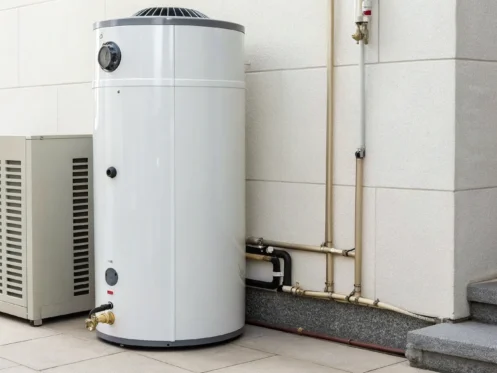
Living in Arizona means we’re experts at using our warm climate to our advantage. A heat pump water heater does exactly that, turning the ambient air in your garage or utility room into hot water for your home. It’s a brilliant piece of technology perfectly suited for our environment. Of course, the big question is always about the bottom line. The heat pump water heater cost can seem high at first glance, but it’s a figure that needs context. Because these units are so efficient in our warm weather, the long-term savings on your electricity bills are substantial. Here, we’ll explore how this smart appliance leverages our local climate to pay for itself over time, making it a wise choice for homeowners in Tucson, Marana, and Sahuarita.
Key Takeaways
- Your total investment includes major savings: The upfront cost is just one part of the equation; factor in the available $2,000 federal tax credit and hundreds in annual energy savings to see the real value of the upgrade.
- These units are perfectly suited for the Arizona climate: Heat pump water heaters work by drawing warmth from the surrounding air, a process that makes them incredibly efficient in our hot environment and leads directly to lower utility costs.
- Proper space and professional installation are essential: To function correctly, these units need ample airflow in a location like a garage or large utility room, and professional installation ensures your system runs safely and efficiently from day one.
What Is a Heat Pump Water Heater?
If you’re like most homeowners in Tucson, your water heater is probably one of the biggest energy users in your home. But what if there was a smarter, more efficient way to get all the hot water you need? That’s where a heat pump water heater comes in. Often called a hybrid water heater, this appliance doesn’t create heat by burning gas or using giant electric coils like traditional models. Instead, it cleverly moves heat from the surrounding air and transfers it to the water in its tank.
Think of it like a refrigerator working in reverse. A fridge pulls heat from inside the unit and releases it into the room to keep your food cold. A heat pump water heater pulls heat from the air in your garage or utility room and puts it into your water. This simple shift in technology makes them incredibly energy-efficient, which is great news for both your wallet and the environment. For anyone looking to upgrade their home’s systems, understanding how these units work is the first step toward significant savings on your utility bills.
How They Use Air to Heat Water
The magic of a heat pump water heater lies in how it uses the air around it. The unit has a fan that draws in ambient air, which then passes over an evaporator coil containing a refrigerant. This refrigerant absorbs heat from the air, turning from a liquid into a gas. The system then uses a compressor to increase the temperature and pressure of that gas. Finally, this super-heated gas flows through coils wrapped around the water tank, transferring its heat to the water inside. It’s a brilliant process that uses just a small amount of electricity to run the fan and compressor, not to generate the heat itself.
Efficiency: Heat Pump vs. Traditional Models
When it comes to performance, the difference between heat pump and traditional models is night and day. Because they move heat rather than create it, heat pump water heaters are typically two to three times more efficient than standard electric water heaters. In fact, an ENERGY STAR certified model can be up to four times more efficient.
What does that mean for you? It means you use far less electricity to get the same amount of hot water for your showers, laundry, and dishes. This translates directly into lower monthly energy bills and a smaller carbon footprint. While traditional water heater services are still common, switching to a heat pump model is one of the most effective upgrades you can make to reduce your home’s energy consumption.
How Much Do Heat Pump Water Heaters Cost?
When you’re thinking about a new water heater, the price tag is usually the first thing that comes to mind. With a heat pump water heater, it’s helpful to look at the cost as a total investment, not just the upfront price. The final amount you’ll pay depends on the unit itself, the complexity of the installation, and some fantastic rebates and tax credits available to you. Let’s break down what you can expect to spend and how those costs add up.
The Upfront Purchase Price
First, let’s talk about the cost of the unit itself. A heat pump water heater typically costs between $1,500 and $3,000. Of course, this can vary. You might find a budget-friendly 50-gallon model for around $1,200, while a larger, high-end unit with more features could be closer to $5,000. For most homes in the Tucson area, a mid-range model from a trusted brand will fall comfortably in that $1,500 to $3,000 sweet spot. This initial price gets you a highly efficient appliance that starts saving you money from day one.
Factoring in Installation Costs
The next piece of the puzzle is installation. The total cost to get your new heat pump water heater up and running usually lands between $2,500 and $6,000, which includes the unit. The wide range comes down to the specifics of your home. If you’re simply replacing an old electric water heater, the job is often straightforward. However, if you’re switching from a gas model or if the installation requires new plumbing or electrical work, the labor costs will be higher. Our team of residential plumbing experts can give you a clear picture of what your specific installation will involve.
Calculating Your Total Investment
To figure out your final investment, you’ll want to combine the unit price and installation costs, then subtract any available incentives. On average, homeowners can expect a total cost of $3,600 to $4,800 when replacing an old electric unit and $4,300 to $6,500 when converting from gas. Here’s the great news: the Inflation Reduction Act offers a federal tax credit of 30% of the cost, up to $2,000. This can significantly lower your out-of-pocket expense, making the switch even more affordable. To get a precise quote for your home, you can schedule an appointment online with us.
What Factors Drive the Final Cost?
When you start shopping for a heat pump water heater, you’ll notice that the final price tag isn’t just about the unit itself. Several key factors come together to determine your total investment. Understanding these variables will help you set a realistic budget and see why one quote might differ from another. From the size of the tank to the specific layout of your home in Tucson, each element plays a role in shaping the final cost. Let’s break down exactly what you need to consider.
How Tank Size Impacts Price
One of the most direct factors influencing cost is the size of the water heater tank. Just like buying groceries, more capacity generally means a higher price. A standard 50-gallon unit will cost less than a larger 80-gallon model designed for a bigger family with higher hot water demands. When choosing a size, think about your household’s daily water usage—how many people are taking showers, running the dishwasher, and doing laundry? Choosing the right size is a balancing act; you want enough hot water to meet your needs without paying for a capacity you’ll never use.
The Role of Efficiency Ratings and Brands
Not all heat pump water heaters are created equal. The brand and its features can significantly affect the price. High-end models with smart technology, like Wi-Fi connectivity that lets you adjust settings from your phone, will have a higher upfront cost. You’ll also see a price difference in units with higher efficiency ratings. An ENERGY STAR certified model might cost more initially, but its superior performance can lead to greater energy savings over time, making it a worthwhile investment for many homeowners in areas like Marana and Sahuarita.
Your Home’s Unique Installation Needs
This is where the details of your home really matter. The complexity of the installation is a major cost driver. If you’re simply replacing an old electric water heater with a new heat pump model in the same spot, the process is usually straightforward. However, if you’re switching from a gas water heater, the job becomes more involved because it often requires new electrical work. The location of the unit—whether it’s in a tight closet or a spacious garage—also impacts labor time. That’s why getting a professional assessment from our team is the best way to get an accurate, all-in quote for your home.
How Much Money Can You Actually Save?
Let’s be honest: the main reason you’re probably considering a heat pump water heater is the promise of a lower energy bill. While the technology is impressive, what really matters is how it impacts your wallet. The good news is that the savings are real and can add up significantly over the life of the unit. By using the air around it to heat water instead of generating heat from scratch, a heat pump water heater works smarter, not harder. This efficiency translates directly into cost savings for you. We’ll break down what you can expect to save annually, how those savings accumulate over time, and how quickly you can expect this smart investment to pay for itself. For homeowners in Tucson and surrounding areas like Marana and Sahuarita, this is a practical way to manage rising energy costs.
A Look at Your Potential Annual Savings
So, what does “saving money” actually look like in numbers? On average, homeowners can save between $80 and $230 on their water heating bills each year. But for many families, the savings are even more substantial. According to ENERGY STAR, a family of four could see their annual energy bills drop by about $550 just by switching from a standard electric water heater. Think about what you could do with that extra cash—it could cover a family weekend trip or a few nice dinners out. These aren’t just abstract figures; they represent tangible cost and savings benefits that make a real difference in your household budget.
Long-Term Financial Benefits
While the annual savings are great, the long-term financial picture is where a heat pump water heater truly shines. These units are typically two to three times more efficient than their traditional electric counterparts. This superior efficiency means the savings compound year after year. Over a decade, a homeowner could save anywhere from $2,000 to $4,000 on energy bills. When you look at it that way, the higher upfront cost starts to feel less like an expense and more like a strategic investment in your home and your financial future. It’s one of the few home upgrades that actively pays you back over time.
How Quickly Does It Pay for Itself?
The question of payback period is always top of mind with a bigger purchase. While a heat pump water heater has a higher initial cost, you start recouping that investment from the very first month with a lower utility bill. The exact time it takes to break even depends on your hot water usage, the efficiency of the model you choose, and local energy rates. However, the payback period is often much shorter than people expect, especially when you factor in available tax credits and rebates. These incentives can significantly reduce your out-of-pocket cost, making it a smart financial move. When you’re ready to explore your options, our team can help you find the right water heater solution for your home in Tucson.
Are There Rebates and Tax Credits Available?
The upfront cost of a heat pump water heater can feel like a big leap, but let’s talk about one of the best parts of making this upgrade: the savings don’t just come from your monthly energy bills. A variety of rebates and tax credits are available to significantly lower your initial investment. These incentives are designed to encourage homeowners to choose more energy-efficient appliances, making it easier for you to get a high-performance unit that benefits both your wallet and the environment.
Think of these programs as a financial thank you for making a smart, eco-friendly choice. From federal tax credits that can shave thousands off the price to local utility rebates that sweeten the deal, there are multiple ways to reduce the cost. Understanding how to find and apply for these incentives is a key step in the process. When you combine these savings with the long-term reduction in your energy bills, the financial picture for a heat pump water heater becomes incredibly appealing. Our team can help you identify the residential plumbing incentives you qualify for in Tucson, Marana, and the surrounding communities.
Finding Federal Tax Credits
The federal government offers some fantastic incentives that make switching to a heat pump water heater more affordable than ever. Through the Inflation Reduction Act, you may be eligible for a tax credit covering 30% of the total project cost, up to a maximum of $2,000 per year. The key is to make sure the model you choose meets ENERGY STAR standards, which is something we can easily confirm for you.
Additionally, the act includes rebates aimed at helping lower and middle-income households. These rebates can cover between 50% and 100% of your new water heater’s cost, with a cap of $1,750. These federal programs can dramatically cut your upfront expense, making this high-efficiency upgrade accessible to more homeowners.
Tapping into Local Arizona Rebates
The savings don’t stop at the federal level. Many local utility companies and state programs in Arizona offer their own rebates to homeowners who install energy-efficient appliances. These programs are designed to make it easier for you to get the best equipment by working with distributors and contractors to increase the availability of top-tier models. These incentives can even make it worthwhile to replace a water heater that’s still functioning, allowing you to start saving on energy costs sooner.
Because these offers can change, it’s always a good idea to check with your local utility provider for the most current information. At Fusion Plumbing & Air, we stay on top of the latest local incentives available in Tucson, Oro Valley, and Sahuarita. When you’re ready to explore your options, schedule an appointment online, and we can help you find the perfect unit that qualifies for maximum savings.
Is a Heat Pump Water Heater a Smart Choice for Arizona?
When you live in a place with as much sunshine as Tucson, you learn to make the climate work for you. That’s exactly what a heat pump water heater does. While the initial cost is a key part of the conversation, the bigger question for Arizona homeowners is whether this technology is a practical, long-term fit for our homes. The short answer is a resounding yes. These systems are uniquely suited to our warm environment, offering a level of efficiency that traditional water heaters just can’t match.
But is it the right move for your home in Oro Valley or Sahuarita? Let’s look at how these units perform in our climate, what you can expect in terms of lifespan, and clear up a few common myths.
How They Perform in Our Hot Climate
Heat pump water heaters work by pulling warmth from the surrounding air and transferring it to the water in the tank. Think of it as a refrigerator working in reverse. In a place like Arizona, where the air is warm for most of the year, the unit has a constant source of heat to draw from. This process is far more energy-efficient than generating heat from scratch with electric coils or a gas burner.
Because they move heat instead of creating it, they use significantly less energy, which translates directly into lower utility bills. For homeowners in Marana and Tucson, this technology leverages our local climate to its advantage, making it one of the most efficient ways to get hot water. It’s a smart system that turns our desert heat into a household asset.
What to Expect for Lifespan and Maintenance
An investment in your home’s infrastructure should be built to last, and heat pump water heaters deliver on that front. With proper care, these units can last up to 15 years—often several years longer than their traditional counterparts. That extended lifespan adds even more value to your initial investment, giving you more years of reliable, efficient hot water.
The key to getting the most out of your unit is consistent upkeep. Just like your car or your AC system, a heat pump water heater performs best with regular check-ups. A professional can ensure all components are working correctly and catch small issues before they become big problems. Signing up for a maintenance agreement is a simple way to protect your investment and keep it running at peak efficiency for years to come.
Clearing Up Common Myths
Let’s address the biggest question on everyone’s mind: the cost. It’s true that the upfront price of a heat pump water heater is higher than a conventional model. However, that initial figure doesn’t tell the whole story. These units are approximately four times more efficient, which means the savings on your monthly energy bills start adding up immediately. Over time, those savings can completely offset the higher purchase price.
Another myth is that new technology is less reliable. In reality, manufacturers often back heat pump water heaters with longer warranties—sometimes up to 10 years compared to the standard 6 years for traditional tanks. This shows their confidence in the unit’s durability. When you’re ready to explore your options, our team can walk you through the best residential plumbing solutions for your home.
What Should You Know Before You Install?
Making the switch to a heat pump water heater is an exciting step toward a more energy-efficient home. But before you jump in, there are a few practical things to consider to ensure a smooth installation and get the most out of your new appliance. Thinking through space, professional help, and the right unit for your needs will set you up for success from day one.
Do You Have the Right Space?
Unlike their traditional counterparts, heat pump water heaters can’t be tucked away in a tight closet. Because they pull warmth from the surrounding air, they require plenty of open space for proper airflow—think a garage, a spacious utility room, or a basement. A good rule of thumb is to have at least 1,000 cubic feet of unconfined air space around the unit. They also release cool, dry air as part of their process, which can be a welcome bonus in a hot Tucson garage but less than ideal in a finished living area.
Why Professional Installation Matters
While it might be tempting to tackle the installation yourself, this is a job best left to the pros. The final cost can vary based on factors like tank size, brand, and whether you’re switching from a gas model, which often requires new electrical work. A certified technician will handle the complexities of plumbing and electrical connections, ensuring your unit runs safely and at peak efficiency. Proper installation is key to unlocking those energy savings, and our team has the expertise to handle all your residential plumbing needs in Tucson, Marana, and Sahuarita.
How to Pick the Perfect Unit for Your Home
Choosing the right heat pump water heater comes down to your household’s specific needs. The unit itself can range from $1,200 for a 50-gallon tank to over $2,500 for an 80-gallon model. Consider your family’s size and daily hot water usage to select the right capacity. Also, pay attention to the Uniform Energy Factor (UEF) rating—a higher number means greater efficiency and more long-term savings. If you’re unsure where to start, we can help you find the perfect fit for your home and budget. Feel free to schedule an appointment online for a personalized consultation.
Making the Right Choice for Your Home
Deciding on a new water heater is a major home investment, and it’s smart to weigh all your options. A heat pump water heater is a fantastic, forward-thinking choice, but it comes with a higher upfront cost than traditional models. While the unit itself can range from $1,500 to $3,000, the total installed cost often lands between $2,500 and $6,000. It’s a significant number, but it’s not the whole story. This initial investment is the first step toward major long-term savings and a more energy-efficient home.
So, where do the savings come from? Heat pump water heaters are incredibly efficient—using two to four times less energy than standard electric water heaters. For homeowners in Tucson, Oro Valley, and Marana, this efficiency translates directly into lower monthly electricity bills. You could see annual savings ranging from $80 to $230, depending on your household’s water usage. Over the lifespan of the unit, those savings really add up, making the initial price much more palatable.
To make the switch even more appealing, significant financial incentives are available. The Inflation Reduction Act offers a federal tax credit covering 30% of the cost, up to $2,000. This isn’t just a small discount; it’s a substantial credit that can dramatically lower your total investment. When you factor in this incentive, the price difference between a heat pump model and a traditional one shrinks considerably, making it an accessible upgrade for many families.
Ultimately, a heat pump water heater is a smart investment in your home’s future. It lowers your carbon footprint, reduces your energy bills, and offers reliable performance in our Arizona climate. The best way to know if it’s the right fit for your home and budget is to get a clear picture of the costs and potential savings. Our team at Fusion Plumbing & Air can walk you through the options, from different models to installation requirements. We’re here to provide a personalized estimate and help you make a choice you feel great about. Ready to see what a heat pump water heater could do for you? Schedule an appointment online with one of our experts today.
Related Articles
- Tankless Water Heater Installation Cost: What to Expect
- Why Heat Pumps Are a Great Heating Solution in Arizona | Fusion
- Water Heater Installation: A Complete DIY Guide
Frequently Asked Questions
Are heat pump water heaters noisy? That’s a great question, and the answer is that they do make some noise, but it’s generally not disruptive. The sound is produced by the fan and compressor, and it’s often compared to the gentle hum of a modern refrigerator or a small window air conditioning unit. If you plan to install it in a garage or a utility room away from your main living areas, you likely won’t even notice it’s running.
What happens if the heat pump part stops working? Do I lose hot water? You won’t be stuck taking a cold shower. Most heat pump water heaters are actually “hybrid” models, which means they have traditional electric heating elements as a backup. If the heat pump component needs service or if the air temperature drops too low for it to work efficiently, the unit automatically switches to its electric backup to ensure you always have a reliable supply of hot water.
How do I know what size tank my family needs? Choosing the right size is key to keeping everyone in your home happy. A good starting point is to consider your household size: a 50-gallon tank is usually sufficient for two to three people, while a family of four or five would likely be better off with an 80-gallon model. However, your family’s specific habits, like running the dishwasher and laundry while someone is showering, also play a big role. We can help you assess your daily hot water usage to find the perfect size for your needs.
How long does the installation process usually take? For a straightforward replacement of an old electric water heater, our team can typically complete the installation in just a few hours. If the job is more complex, such as switching from a gas model which requires new electrical wiring, it might take the better part of a day. We always provide a clear timeline upfront so you know exactly what to expect.
Can you help me figure out which rebates and tax credits I qualify for? Absolutely. Navigating the world of incentives can be confusing, but we’re here to make it simple. Our team stays current on all federal tax credits and local Arizona rebate programs. During your consultation, we can help you identify which ENERGY STAR certified models qualify for the best savings and guide you through the steps needed to claim them.