When your furnace starts blowing cold air after a filter change, it might feel like something is broken, but it’s often the opposite. This is frequently a sign that your furnace’s safety systems are working exactly as they should. A new filter, if it’s the wrong type or installed incorrectly, can restrict airflow and cause the system to overheat. To prevent damage, a safety switch shuts off the burners while the fan continues to run, pushing out cool air. Understanding this process is the key to fixing the problem. Let’s explore why this happens and what you can do about it.
Key Takeaways
- Inspect Your New Filter Installation: The most common cause of cold air after a filter change is an installation error. Confirm the filter is the right size and that the airflow arrows on the frame point toward the furnace.
- Verify Your Thermostat and Vents: Before assuming a major issue, make sure your thermostat is set to “HEAT” and the fan is on “AUTO.” A fan set to “ON” will circulate unheated air between cycles. Also, ensure your air vents are open and clear.
- Recognize When to Call a Professional: If basic troubleshooting doesn’t resolve the issue, or if you hear loud noises, notice the system cycling frequently, or suspect a gas leak, it’s time to call for expert service to ensure a safe and correct repair.
Why Is My Furnace Blowing Cold Air After a Filter Change?
It’s one of those frustrating home maintenance moments: you do the right thing by changing your furnace filter, only to find it’s now blowing cold air through your vents. It feels counterintuitive, but this is a surprisingly common issue. Before you worry about a major breakdown, know that the problem is often directly related to the filter change itself. The good news is that the cause is usually a simple fix related to airflow, a safety feature, or a thermostat setting.
When your furnace suddenly starts acting up after a simple task, it’s usually a sign that something is slightly off. Let’s walk through the most common reasons this happens and what you can do about it. If you check these things and still have issues, our team is always ready to provide expert heating services in Tucson and the surrounding communities.
Is Something Blocking the Airflow?
Your furnace needs to breathe. Proper airflow is essential for it to heat your home safely and efficiently. When you install a new filter, it can sometimes restrict that airflow, especially if it’s the wrong size or installed incorrectly. A filter that’s too dense or put in backward can suffocate the system. When this happens, your furnace can overheat. As a safety measure, it will shut off the burners to prevent damage, but the fan will keep running to cool the system down. This is why you suddenly feel cold air coming from your vents. Always check that the arrow on the filter is pointing in the direction of the airflow, toward the furnace itself.
Did a Safety System Turn On?
That overheating we just talked about triggers a specific safety device called a high-limit switch. Its only job is to shut off the fuel supply to the burners when internal temperatures get dangerously high. This is a critical feature that prevents fires and protects the furnace’s internal components. So, when your furnace blows cold air, it’s often a sign that this safety switch has done its job. The fan continues to run to dissipate the excess heat, but no new heat is being generated. In other cases, the issue could be a faulty igniter that isn’t lighting the gas, which also results in unheated air circulating through your home.
Is Your Thermostat Communicating Correctly?
Sometimes, the solution is right on your wall. Your thermostat has a fan setting that can be switched between “AUTO” and “ON.” If the setting is on “AUTO,” the fan will only run when the furnace is actively heating the air. However, if it’s set to “ON,” the fan will run continuously, 24/7, whether the furnace is heating or not. It’s easy to accidentally switch this setting. When the fan runs constantly, it will circulate cool, room-temperature air between heating cycles, making it feel like your furnace is blowing cold. Before you do anything else, check your thermostat and make sure the fan is set to “AUTO” and the system is set to “HEAT.”
How Your Air Filter Impacts Furnace Performance
It’s easy to overlook your furnace’s air filter, but this simple component plays a huge role in how well your heating system works. Think of it as the lungs of your HVAC system. When it gets clogged with dust, pet dander, and other debris, your furnace can’t “breathe” properly. This restriction is one of the most common reasons a furnace starts acting up, especially right after a filter change if something went wrong. Understanding how a small filter can cause such a big headache is the first step to getting your warm air back. A clean, correctly installed filter is essential for efficient and reliable heating services throughout the colder months in Tucson.
Why Proper Airflow Is So Important
Proper airflow is non-negotiable for your furnace to operate safely and efficiently. Your system is designed to pull a specific amount of air across its heat exchanger to warm it before distributing it through your home. When a dirty filter gets in the way, it drastically reduces the volume of air passing through. This forces the furnace’s blower motor to work much harder to circulate air, increasing energy consumption and putting unnecessary strain on the components. This struggle can lead to overheating, which triggers safety sensors to shut the system down, leaving you in the cold. Consistent, unobstructed airflow keeps your system running smoothly and prevents premature wear and tear.
What Happens When a Filter Blocks Air
When a filter is so clogged that it blocks air, your furnace goes into self-preservation mode. A component called the limit switch monitors the internal temperature of the heat exchanger. If it gets dangerously hot from the lack of airflow, the limit switch will shut off the burners to prevent damage or a potential fire hazard. However, the blower fan often continues to run to help cool down the overheated components. This is why you suddenly feel cold air coming from your vents instead of heat. Your furnace isn’t broken; its safety features are just doing their job in response to a circulation problem caused by the blocked filter.
Common Filter Installation Mistakes
It’s not always a dirty filter that causes the problem—sometimes it’s an installation mistake. One of the most frequent errors is putting the filter in backward. Most filters have arrows printed on the frame to show the correct direction of airflow; they should always point toward the furnace and away from the return duct. Installing it backward can restrict air and strain the system. Another common issue is using the wrong size or type of filter. A filter that’s too small will let unfiltered air bypass it, while one that’s too restrictive (with a very high MERV rating) can choke the system if it wasn’t designed for it, leading to the same overheating issues as a clogged filter.
How to Troubleshoot Cold Air From Your Furnace
When your furnace starts blowing cold air right after you’ve changed the filter, it’s easy to feel frustrated. You did the right thing by performing routine maintenance, so what went wrong? The good news is that the fix is often simpler than you think. Before you worry about a major repair, there are several troubleshooting steps you can take on your own to diagnose and potentially solve the problem. These checks are straightforward and address the most common reasons a furnace acts up after a filter change.
We’ll walk through five key areas to inspect, starting with the easiest fixes. You’ll learn how to check your thermostat settings, confirm the new filter is installed correctly, reset the system, and ensure proper airflow. For those who are a bit more hands-on, we’ll even touch on how to safely check the igniter and flame sensor. Taking a few minutes to go through these steps can often get the warm air flowing again. If you try these fixes and still feel a chill, it’s a clear sign that it’s time to call in a professional for heating services.
Step 1: Check Your Thermostat Settings
Before you get too deep into the furnace itself, let’s start with the control panel: your thermostat. It might sound basic, but a simple setting mix-up is a frequent cause of cold air complaints. First, check the fan setting. If the fan is set to “ON,” it will run continuously, even when the furnace isn’t actively heating. This means it will circulate room-temperature air between heating cycles, making it feel like the furnace is blowing cold. For normal operation, the fan should be set to “AUTO.” This ensures the fan only runs when your furnace is producing heat. Also, double-check that the system is set to “HEAT” and that the temperature is set a few degrees higher than the current room temperature.
Step 2: Inspect the Air Filter’s Installation
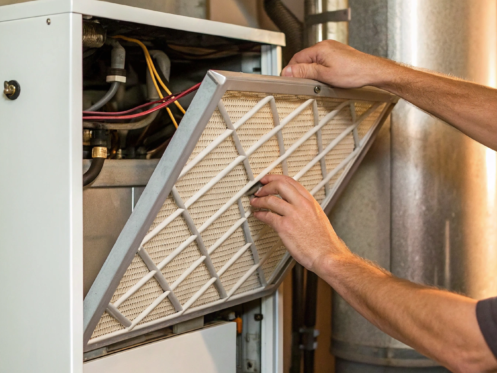
Since the problem started right after you changed the filter, the filter itself is the most likely culprit. A new filter can cause issues if it’s the wrong size, is too restrictive, or is installed backward. Every filter has arrows on the frame indicating the correct direction of airflow—they should always point toward the furnace. If the filter is in backward, it can restrict airflow and cause the furnace to overheat. This triggers a safety feature called the limit switch, which shuts off the burners to prevent damage, leaving the fan to blow unheated air. Pull the filter out and confirm the arrows are pointing in the right direction and that it fits snugly in the slot.
Step 3: Reset Your Furnace
Sometimes, your furnace just needs a quick reboot to clear a minor fault, much like restarting your computer. A power cycle can reset the internal components and resolve temporary glitches that may have been triggered during the filter change. To do this safely, start by turning your thermostat to the “OFF” position. Next, locate your home’s main electrical panel and find the circuit breaker labeled for your furnace or HVAC system. Flip the breaker to the “OFF” position and wait for a full five minutes. This gives the system time to fully reset. Finally, flip the breaker back on and turn your thermostat back to “HEAT.”
Step 4: Make Sure Vents and Registers Are Open
Proper airflow is critical for your heating system to work correctly. If too many vents are closed or blocked, it can create pressure imbalances that cause the furnace to overheat and shut down its burners. Take a quick walk through your home and check all the supply vents (the ones blowing air out) and return vents (the larger ones pulling air in). Make sure they are all open and not obstructed by furniture, rugs, curtains, or anything else. It’s a common misconception that closing vents in unused rooms saves energy, but it often just puts extra strain on your HVAC system. Keeping them all open ensures balanced airflow.
Step 5: Look at the Igniter and Flame Sensor
If the simpler steps don’t work, the issue might be with the components that create heat. This step is for those who feel comfortable looking inside their furnace—always turn off the power at the breaker first. The igniter is the part that glows hot to light the gas, and the flame sensor is a safety device that confirms a flame is present. If the igniter is cracked or failing, it won’t get hot enough to light the burners. If the flame sensor is dirty, it can’t detect the flame and will shut the gas off. You can often see if the igniter is glowing when the furnace tries to start. If you suspect an issue here, it’s usually best to schedule an appointment with a professional.
What to Check Before You Call for Service
Before you pick up the phone, there are a few simple checks you can perform that might solve the problem right away. Running through these steps can save you time and the cost of a service call. These are all safe, straightforward inspections you can do yourself to gather more information about what’s going on with your furnace. If you’ve already double-checked your thermostat settings and filter installation, these next steps will help you narrow down the potential culprits. Think of it as a little detective work that can either fix the issue or give our technicians a head start when they arrive.
Confirm the Gas Supply and Pilot Light Are On
Your furnace can’t produce heat without fuel. First, make sure your gas supply is active by checking other gas appliances in your home, like your stove or water heater. If they’re working, the issue is likely with the furnace itself. Older furnaces use a pilot light—a small, constant flame that ignites the gas. If you have one, check to see if it’s out. For newer models with an electronic ignition, the problem could be the igniter. One common reason for no heat is that the igniter, which should glow red or spark to light the gas, isn’t working. If it’s not glowing, the gas won’t light, and you’ll only get cold air.
Inspect the Circuit Breaker
Your furnace needs electricity to power the fan, igniter, and safety controls. Head to your home’s main electrical panel and look for the breaker labeled “Furnace,” “Heater,” or “HVAC.” If the switch is in the middle or “Off” position, it has tripped. To reset it, flip the switch completely to the “Off” position, wait about a minute, and then flip it back to “On.” If the breaker trips again right away, don’t keep resetting it. This indicates a more serious electrical problem that needs professional attention. It’s a safety feature doing its job, and our team can provide expert heating services to find and fix the underlying issue safely.
Listen to the Blower Motor and Fan
When your furnace is running, you should hear the steady hum of the blower motor pushing air through your home. Pay close attention to any unusual sounds. Are you hearing any loud banging, squealing, or grinding noises? These often point to a mechanical problem with the fan or motor itself. When your furnace blows cold air, it often means the heating component isn’t working, but the fan is still running. If the fan sounds strained or is making strange noises, it’s best to turn the system off at the breaker and call for help. Ignoring these sounds can lead to more extensive and costly damage to your system.
Look for Error Codes on the Display
Many modern furnaces have a built-in diagnostic system that can tell you exactly what’s wrong. Look for a small, clear window on the furnace’s access panel. Behind it, you should see a small LED light. If the system has detected a problem, this light will flash in a specific sequence. These flashing lights are error codes. You can often find a guide to these codes on a sticker inside the furnace panel or in your owner’s manual. Note the pattern of the flashes and what the code means. This information is incredibly helpful for our technicians and can speed up the repair process when you schedule an appointment with us.
When Is It Time to Call a Professional?
While it’s great to be able to handle basic troubleshooting, some furnace issues are best left to the experts. If you’ve worked through the common fixes and your furnace is still giving you the cold shoulder, it’s time to call for backup. Modern furnaces are complex systems, and trying to fix certain problems without the right training can lead to bigger, more expensive damage or even create serious safety hazards. A professional technician has the right tools and experience to diagnose the root cause quickly and safely. For homeowners in Tucson, Marana, and Sahuarita, knowing when to make that call can save you a lot of time and stress. Our team is always ready to provide expert heating services when you need them most.
You Suspect an Ignition Problem
If your furnace clicks on like it’s about to start but never actually produces heat, you might have an ignition problem. The igniter is a small but essential part that lights the gas in your furnace’s burners. If it’s cracked, worn out, or faulty, the burners won’t light, and you’ll be left with nothing but cold air. While it might seem like a simple part to swap, replacing an igniter involves working with both the electrical and gas systems of your furnace. For your safety, this is a job that should always be handled by a certified technician who can ensure the repair is done correctly.
You’re Concerned About a Gas Leak
This is one situation where you should never hesitate. If you smell rotten eggs in your home, it’s a tell-tale sign of a natural gas leak. Your gas company adds this distinct odor specifically to alert you to danger. If you suspect a leak, leave your home immediately. Don’t turn any lights on or off, don’t use your phone, and don’t try to find the source of the leak yourself. Once everyone is safely outside and away from the house, call 911 or your gas utility’s emergency line. After the immediate danger is handled, you’ll need a professional to inspect and repair your furnace before it’s safe to use again.
The Problem Keeps Coming Back
Did you manage to get the heat working, only for it to start blowing cold air again a day later? Persistent problems are a clear sign that there’s an underlying issue that simple troubleshooting can’t fix. If you’ve already checked the filter, reset the furnace, and confirmed your thermostat is working, but the problem keeps returning, it’s time to call a professional. A recurring issue could point to a failing sensor, a clogged condensate line, or a more complex mechanical problem. A technician can diagnose the real issue, preventing further damage and ensuring a lasting solution. Regular tune-ups through a maintenance agreement can also catch these problems early.
You Hear Strange Noises or Constant Cycling
Your furnace should operate relatively quietly. If you start hearing loud or unusual sounds, pay attention. Banging, rattling, or high-pitched squealing noises are all red flags that something is wrong internally. Banging can indicate a delayed ignition, while rattling could mean a loose panel or part. Squealing often points to a problem with the blower motor or belt. Another warning sign is “short cycling,” which is when the furnace turns on and off every few minutes. This is not only inefficient but also puts major stress on the components. If you notice any of these signs, it’s best to schedule a service call to have it checked out.
Important Safety Precautions to Take
Working on your furnace can feel empowering, but your safety should always come first. A seemingly simple task involves complex components, electricity, and gas. Before you try to fix anything yourself, it’s essential to understand the risks and how to protect yourself. Taking a few key precautions will help you handle basic troubleshooting safely and know exactly when to step back and call a professional.
Know How to Shut Off Power and Gas
Before you open any access panels or touch internal components, you must turn off the power to your furnace. Look for a power switch that resembles a light switch on or near the unit. If you can’t find it, go to your home’s main electrical panel and flip the breaker for the furnace. This is a non-negotiable first step. Cutting the electricity protects you from shock and automatically closes the gas valve as a safety measure, preventing gas from flowing while you work. If you’re ever unsure, it’s always safest to call for professional heating services.
Use the Right Protective Gear and Tools
Protecting yourself from scrapes and debris is simple with the right gear. The inside of a furnace can have sharp metal edges, so a good pair of work gloves is a must. Safety goggles are also a smart idea to keep dust out of your eyes when you’re inspecting the unit. Using the correct tools not only makes the work easier but also prevents you from accidentally damaging sensitive components. This is why a professional maintenance agreement is so valuable—our certified technicians arrive with all the necessary equipment to perform every task safely and efficiently, giving you peace of mind.
Recognize the Warning Signs of a Gas or CO Leak
This is one area where you should never take chances. You need to recognize the signs of a gas or carbon monoxide (CO) leak immediately. Natural gas has a distinct “rotten egg” smell added to it for detection; if you smell this or hear a hissing sound near a gas line, you have a serious problem. Carbon monoxide is odorless and colorless, but it causes symptoms like headaches, dizziness, and nausea. If you notice any of these warning signs, do not try to find the source. Evacuate your home immediately and call your gas company or 911 from a safe distance. For urgent furnace concerns, you can schedule online with us 24/7.
How to Prevent Cold Air Problems in the Future
The good news is that you can avoid that chilly surprise with just a little routine care. Preventing furnace problems is much less stressful than fixing them, and it all comes down to a few simple habits. By paying attention to your filter and scheduling regular check-ups, you can keep your system running smoothly all winter. These steps not only prevent cold air issues but also help your furnace operate more efficiently, saving you money and extending its lifespan. Our professional heating services are always here to help keep your system in top shape.
Choose the Correct Filter Size
Using the right filter size is the foundation of good furnace performance. A filter that’s too small will let dust and debris bypass it, while one that’s too large simply won’t fit. More importantly, ensure the filter isn’t too restrictive. A high-efficiency filter with a dense weave can choke the airflow if your furnace isn’t designed for it, causing the system to work too hard, overheat, and shut down the burners. Always check the dimensions printed on your old filter or in your furnace manual to get the perfect fit for your unit.
Follow Proper Installation Steps
Once you have the right filter, installing it correctly is just as important. Every furnace filter has an arrow printed on its frame for a reason. This arrow must point in the direction of the airflow—which means it should point toward the furnace and away from the return air duct. If you put it in backward, the filter can’t do its job properly. This restricts airflow, forcing your furnace to shut off the heat as a safety measure while the fan keeps running. It’s a simple mistake that leads directly to that frustrating blast of cold air.
Stick to a Regular Maintenance Schedule
The best way to prevent future problems is with consistent, professional maintenance. Just like your car, your furnace needs regular tune-ups to stay in top shape. During a maintenance visit, a technician can catch small issues before they turn into major, costly repairs. They’ll clean essential components, check for safe operation, and ensure your system is running at peak efficiency. Signing up for a maintenance agreement is an easy way to make sure you never forget this crucial step, keeping your home in Tucson comfortable and your furnace reliable for years to come.
Related Articles
- Furnace Blowing Cold Air? 8 Common Causes & Fixes
- Furnace Blowing Cold Air? 6 Reasons & Easy Fixes
- AC Not Blowing Cold Air But Running? What to Check
Frequently Asked Questions
Is a more expensive, high-efficiency filter a better choice for my furnace? Not necessarily. While high-efficiency filters are excellent at capturing dust and allergens, their dense material can sometimes restrict airflow too much. If your furnace system isn’t designed for that kind of filter, it can struggle to pull in enough air, causing it to overheat and shut the burners off. It’s always best to check your furnace manual for the recommended filter type to ensure you get the right balance of air quality and system performance.
How can I tell if my furnace’s safety limit switch has been tripped? The most obvious sign is that the furnace fan is running and blowing cool air, but you never hear the burners ignite or feel any heat. The system does this on purpose to cool down internal components that have gotten too hot. The furnace might try to restart the heating cycle after a few minutes, but if the airflow problem isn’t fixed, it will likely trip again. A constantly tripping switch is a clear signal of an underlying issue that needs attention.
My furnace is making a clicking sound but won’t produce heat. What does that mean? That clicking is often the sound of the electronic igniter trying to light the gas burners. If it clicks but no flame appears, it usually means the igniter is failing or the flame sensor is too dirty to detect that the burners have lit. When the sensor doesn’t detect a flame, it shuts the gas valve as a safety precaution. Because this involves both the gas and electrical systems, it’s a problem that should be diagnosed and repaired by a qualified technician.
How often should I actually be changing my furnace filter? A good general guideline is every 90 days, but your home’s environment is the biggest factor. If you have pets that shed, live in a dusty area like Tucson, or have family members with allergies, you should check the filter monthly. A simple test is to hold it up to a light. If you can’t see the light through the filter, it’s definitely time for a new one. Staying on top of this is the easiest way to prevent many common furnace issues.
I’ve checked the filter and thermostat, but the air is still cold. What’s the next step? After confirming the simple fixes, the next step is to reset the furnace completely. You can do this by turning the thermostat to “OFF,” then locating the furnace breaker in your home’s electrical panel and flipping it off. Wait a full five minutes before turning the breaker back on and setting your thermostat to “HEAT.” This can clear minor electronic faults. If the problem persists after a reset, it’s a sign that the issue is more complex and it’s time to call for professional service.