That big metal tank in your garage or closet works tirelessly, but most of us don’t give it a second thought until a cold shower ruins our morning. Understanding what’s happening inside your water heater isn’t just for plumbers; it’s for any homeowner who wants to catch small problems before they become big, expensive emergencies. This guide is your friendly tour of the essential components, from the heating elements doing the heavy lifting to the safety valves that prevent disaster. We’ll break down what each part does, how they work together, and what it means when one of them fails. Knowing the basic electric water heater parts and accessories empowers you to troubleshoot with confidence and know exactly when it’s time to call for professional help.
Key Takeaways
- Perform Annual Maintenance: Flushing your tank to clear out sediment and checking the anode rod to prevent rust are the most important steps you can take to extend your water heater’s lifespan and maintain its efficiency.
- Diagnose Problems by Their Symptoms: You can often identify the faulty part by the problem you’re experiencing. No hot water usually points to a heating element, strange noises suggest sediment buildup, and a tripping breaker indicates an electrical issue.
- Prioritize Safety and Correct Parts: Always use your water heater’s model and serial number to find the exact OEM replacement part for a successful repair. For your safety, any work involving electrical components or major leaks should be handled by a certified professional.
How Your Electric Water Heater Works: A Guide to Its Parts
Ever wondered what’s going on inside that big metal tank that gives you hot showers? Understanding the basic parts of your electric water heater can help you spot problems early and know when to call for help. Think of this as a quick tour of the components working together to keep your water warm. From the parts that do the heating to the ones that keep you safe, each piece has a vital role. When one part fails, it can affect the whole system, which is why knowing a little about how it works can save you a lot of hassle.
The Heating Elements: The Powerhouse of Your Heater
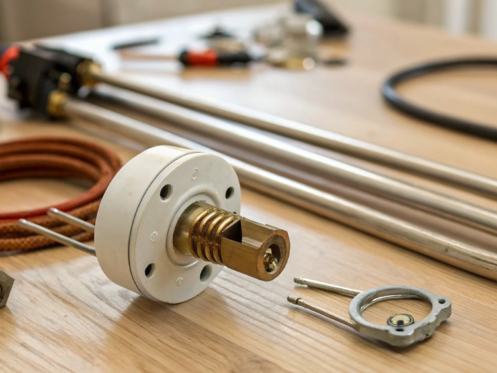
The heating elements are the core of your water heater’s operation. These metal rods work much like the coils in a toaster, glowing hot to heat the water surrounding them. Most residential electric water heaters have two elements—one near the top and one near the bottom—to heat the water efficiently. When the top element heats the water, it rises, and the bottom element kicks in to heat the cooler water below. If you suddenly find yourself with only lukewarm water, a burned-out heating element is a likely culprit. It’s a common issue that our team handles with our residential plumbing services across Tucson.
The Anode Rod: The Unsung Hero Protecting Your Tank
Tucked away inside your tank is a component you’ve probably never seen: the anode rod. This metal rod, usually made of magnesium or aluminum, is a true hero. Its job is to sacrifice itself to protect your tank from rust and corrosion. Water naturally contains minerals that can eat away at the steel tank over time. The anode rod is made of a more reactive metal, so it attracts these corrosive elements, corroding itself instead of your tank. This simple part can double the life of your water heater, but it needs to be checked and replaced every few years as part of a regular maintenance agreement.
The T&P Valve: Your Heater’s Most Important Safety Feature
The temperature and pressure relief (T&P) valve is your water heater’s most critical safety device. This small valve, usually located on the top or side of the tank, has a big job: preventing an explosion. If the temperature or pressure inside the tank gets dangerously high, the T&P valve automatically opens to release water and relieve the pressure. If you ever see this valve leaking or dripping, it’s a sign that it’s either doing its job due to excess pressure or that the valve itself is failing. In either case, it’s a situation that requires immediate attention from a qualified plumber.
The Thermostat: The Brains Behind the Heat
Just like the thermostat on your wall controls your home’s air conditioning, the thermostat on your water heater controls the water temperature. Most electric models have a separate thermostat for each heating element. It senses the water temperature and tells the heating elements when to turn on and off to maintain the temperature you’ve set. For safety and energy efficiency, most experts recommend a setting of 120°F. If your water is too hot or not hot enough, a faulty thermostat could be the problem. Adjusting or replacing it is a task best left to a professional to ensure it’s done correctly.
The Tank, Drain Valve, and Insulation
These three parts work together to hold and preserve your hot water. The inner tank is the large steel container that holds dozens of gallons of water. Surrounding this tank is a thick layer of insulation, which is what keeps the water hot between heating cycles, making the unit more efficient. At the very bottom of the tank, you’ll find the drain valve. This valve is used to empty the tank for maintenance, like flushing out sediment buildup that can reduce efficiency and damage the tank over time. Regular flushing is a simple step that can significantly extend the life of your heater.
The Electrical Supply: What Powers It All
Your electric water heater is a powerful appliance that requires a dedicated 240-volt circuit. The electrical supply includes the wiring that runs from your home’s main electrical panel to the heater, as well as the circuit breaker that protects it. The breaker is a safety device designed to trip and cut power if it detects an overload or a short circuit, preventing electrical fires. If you find your water heater is constantly tripping the breaker, it’s a clear sign of an underlying electrical issue. For your safety, any troubleshooting related to the electrical supply should be handled by a certified technician who can schedule an online appointment to diagnose the problem.
How to Find the Right Replacement Parts
So, you’ve identified a faulty part on your electric water heater. The next step is finding the right replacement, which can feel like searching for a needle in a haystack. Getting the exact part is crucial—the wrong one can lead to leaks, poor performance, or even damage your entire unit. But don’t worry, with a little detective work, you can track down exactly what you need to get your hot water flowing again.
Start with Your Model and Serial Number
Before you even open a new browser tab, head to your water heater. On the side of the tank, you’ll find a sticker with all the essential information, including the model and serial numbers. Think of this as the unit’s birth certificate. Snap a picture of it with your phone so you have it handy. These numbers are your key to finding the correct components. Manufacturers often update parts mid-production, so two heaters that look identical might have different internal parts. To find the correct part, you’ll often need to enter your water heater’s serial number into the manufacturer’s online search tool. This is the single most important step to ensure you get a part that fits and functions correctly.
Use the Manufacturer’s Compatibility Guide
With your model and serial number in hand, your first stop should be the manufacturer’s website. Look for a “parts” or “support” section. Their compatibility guide is the most reliable source for identifying the exact part number you need. This eliminates guesswork and ensures the part you order is designed specifically for your unit. While local hardware stores stock parts from various brands, you should always cross-reference those parts with the manufacturer’s recommendation. A part that looks similar isn’t always the right fit. Sticking with the manufacturer’s guide is the safest way to guarantee compatibility and avoid a return trip to the store.
Measure the Old Part for a Perfect Match
If you can’t find a clear part number, it’s time to break out the tape measure. Carefully measure the old component’s dimensions—length, width, diameter, and the distance between any mounting screws. Pay close attention to the size and type of connections. Also, take a look at what the part is made of. The materials a part is made from can significantly affect its durability and lifespan. Comparing your old part to a potential replacement can help you spot subtle differences that might cause problems later on. Taking a few extra minutes to double-check these details can save you a lot of frustration.
Check the Voltage and Amperage Requirements
For electrical components like heating elements and thermostats, getting the physical dimensions right is only half the battle. You must also match the voltage and wattage requirements. You can usually find this information printed directly on the old part. Installing a part with the wrong electrical specs is a serious safety risk. It can burn out the new component, damage your water heater’s control board, or trip your circuit breaker. If you’re ever unsure about the electrical requirements, it’s always best to consult with a professional. Your home’s safety is not the place to take chances.
OEM vs. Aftermarket: Which Part Is Better?
When you start shopping, you’ll see two types of parts: OEM and aftermarket. OEM stands for Original Equipment Manufacturer, meaning the part is made by the same company that built your water heater. Aftermarket parts are made by third-party companies. You can often buy original (OEM) replacement parts directly from the manufacturer. These are guaranteed to be a perfect fit and match the quality of the original component. Aftermarket parts are often cheaper, but their quality and fit can be inconsistent. For critical safety and performance parts, like a T&P valve or thermostat, sticking with OEM is almost always the better long-term investment for your peace of mind.
A Word of Caution on “Universal” Parts
You might come across parts labeled “universal.” While the idea of a one-size-fits-all solution is tempting, these parts rarely fit anything perfectly. A universal heating element might not seal correctly, leading to a slow leak, or a universal thermostat might not regulate temperature accurately. Using ill-fitting parts can cause more significant issues down the road, turning a simple repair into a major headache. If you’re struggling to find the right component or aren’t confident in making the repair yourself, our team at Fusion Plumbing & Air is here to help. We can source the exact parts for your unit and ensure they’re installed safely and correctly, serving homes across Tucson, Marana, and Sahuarita.
Common Water Heater Problems and the Parts That Fix Them
Even the most reliable water heater can run into trouble. The good news is that most issues point to a specific part, making the diagnosis a little easier. When you know what to look for, you can better understand what’s happening inside your tank and what it will take to fix it. Here are a few of the most frequent problems homeowners in Tucson face and the parts that are usually responsible.
No Hot Water? Check the Heating Element and Thermostat
A cold shower is often the first sign that something is wrong with your electric water heater. If the water isn’t heating up at all, the problem usually lies with one of two components: the heating element or the thermostat. The thermostat tells the heating element when to turn on, and the element does the actual work of heating the water. If either one fails, the whole system stops working. A faulty thermostat won’t send the signal, and a burned-out element can’t heat. Testing and replacing these parts is a common water heater repair that can get your hot water flowing again.
Finding a Leak? Inspect the Tank, Valves, and Connections
Discovering a puddle around your water heater is never a good feeling. Leaks can come from several places, so it’s important to identify the source. Check the connections where the water lines enter and exit the tank, as well as the temperature and pressure (T&P) relief valve and the drain valve. These are often fixable. However, if the tank itself is leaking, it’s a much more serious issue. This is typically caused by internal corrosion that has eaten through the steel. Unfortunately, a leaking tank can’t be repaired and means it’s time for a full replacement. This is why regular plumbing maintenance is so critical for extending the life of your unit.
Hearing Strange Noises? It Could Be Sediment Buildup
Is your water heater making popping, rumbling, or crackling sounds? That noise is likely caused by sediment buildup. Over time, minerals from our hard water here in Arizona settle at the bottom of the tank, creating a thick layer. When the lower heating element kicks on, it has to heat the water through this layer of sediment. The noise you hear is water boiling and bubbling up through the gunk. This process is not only inefficient, but it can also cause the heating element to burn out prematurely and damage the tank’s inner lining. The solution is to have your tank flushed regularly as part of a maintenance agreement to clear out the buildup.
Breaker Tripping? It’s Time for Electrical Troubleshooting
If your water heater is constantly tripping the circuit breaker, you have an electrical problem that needs immediate attention. This usually happens when a part, most often a heating element, is failing and drawing too much electricity, causing the breaker to trip as a safety measure. It can also indicate a short circuit within the unit’s wiring or thermostat. Because you’re dealing with both water and high voltage, this is not a DIY-friendly fix. For your safety, it’s best to turn off the power to the unit and have a professional diagnose the issue. If you’re in Tucson, Marana, or Sahuarita, you can schedule online with a certified technician to safely resolve the problem.
Simple Maintenance to Extend Your Heater’s Life
A little bit of maintenance goes a long way in keeping your electric water heater running smoothly and efficiently for years. Think of it like a car—you wouldn’t skip oil changes and expect it to run forever, right? The same principle applies to your water heater. These simple, proactive steps can help you avoid the shock of a surprise cold shower and the stress of an expensive emergency repair. By dedicating a small amount of time each year to your water heater, you protect your investment, save on energy bills, and ensure you always have hot water when you need it. It’s one of those home maintenance tasks that’s easy to forget until something goes wrong, but staying ahead of potential issues is the key to a long and happy relationship with your appliance. From flushing out sediment that can hinder performance to making small adjustments that improve safety and efficiency, these tips are designed to be straightforward and effective. Taking these steps not only extends the life of your unit but also gives you peace of mind, knowing that a critical part of your home’s comfort system is in top shape. This isn’t about becoming a master plumber overnight; it’s about smart homeownership and making sure your systems work for you, not against you.
Why You Should Flush Your Tank and Check the Anode Rod Annually
Over time, minerals like calcium and magnesium naturally present in Tucson’s water settle at the bottom of your water heater tank, creating a layer of sediment. Regular maintenance is essential to ensure the longevity and efficiency of your water heater, and neglecting it means you risk allowing this sediment buildup to harden. This forces the heating elements to work harder, wastes energy, and can eventually damage the tank. Flushing the tank once a year clears out this gunk. At the same time, you should check the anode rod. This rod sacrifices itself to prevent corrosion in your tank, and once it’s depleted, the tank itself starts to rust. An annual check lets you replace it before that happens. Our maintenance agreement can take care of this for you.
Adjust Temperature Settings for Efficiency and Safety
Most manufacturers set water heater thermostats to 140°F, but for most households, 120°F is perfectly adequate. Lowering the temperature does two great things: it reduces the risk of scalding, especially if you have kids or elderly family members, and it saves you money. An electric water heater can provide high-quality performance while helping you save on energy. For every 10°F you lower the temperature, you can save up to 5% on your water heating costs. It also slows mineral buildup and reduces wear and tear on the tank and its components, helping everything last longer. It’s a simple adjustment that offers significant benefits with no downside.
Know When to DIY and When to Call a Professional
Some water heater tasks are simple enough for a confident homeowner to handle. For instance, testing the temperature and pressure relief valve or adjusting the thermostat are usually straightforward. Knowing the different parts of your water heater can help you troubleshoot minor issues and maintain performance. However, many jobs are best left to the pros. Anything involving the electrical components, like replacing a heating element or thermostat, requires a qualified technician to ensure it’s done safely. If you’re dealing with a significant leak or need to replace the unit entirely, it’s time to call for help. When in doubt, it’s always safer to schedule an appointment online with a certified plumber.
Where to Find Quality Replacement Parts You Can Trust
When a part in your water heater fails, using a high-quality replacement is crucial. The materials a part is made from can significantly impact its lifespan and performance. While it might be tempting to grab a cheaper, generic part from a big-box store, these often don’t fit perfectly or wear out quickly, leading to more problems down the road. Whenever possible, opt for Original Equipment Manufacturer (OEM) parts designed specifically for your water heater model. For peace of mind and guaranteed compatibility, the best approach is to have a professional handle the repair. Our technicians use trusted, high-quality parts for all our heating services, ensuring your repair is done right the first time.
Related Articles
- Water Heater Leaking? Your Step-by-Step Guide
- Leaking Water Heater? An Emergency Step-by-Step Guide
- Tankless Water Heater Repair: A Complete Guide
- Tankless Water Heater Repair: A Complete Guide
Frequently Asked Questions
Why is my water heater making a popping or rumbling noise? That sound is almost always a sign of sediment buildup at the bottom of your tank. Over time, minerals from the water settle and form a hard layer. The noise you hear is water getting trapped under that layer and boiling, much like a covered pot on the stove. While it sounds alarming, it’s a common issue, especially with our hard water in Tucson. The best solution is to have the tank flushed to clear out the sediment, which will quiet it down and help it run more efficiently.
Is it safe for me to replace parts on my electric water heater myself? While it can be tempting to tackle a repair yourself, you have to be careful. Simple tasks like testing the T&P valve are generally fine for a handy homeowner. However, anything involving the electrical system, such as replacing a heating element or thermostat, should be left to a professional. You’re dealing with a high-voltage appliance filled with water, and a mistake can be dangerous. It’s always better to prioritize your safety and call a certified technician.
My water is only lukewarm, not hot. What’s the most likely cause? When your hot water turns lukewarm, it’s often a problem with one of the two heating elements. Most electric water heaters have an upper and a lower element. If the lower one fails, the upper element can only heat the top portion of the tank, leaving you with a very limited supply of hot water. It could also be a faulty thermostat that isn’t correctly signaling the element to turn on.
How do I know if my water heater needs a simple repair or a complete replacement? Most problems, like a burned-out heating element or a faulty valve, can be fixed with a straightforward repair. The major red flag that signals a replacement is needed is a leak coming from the tank itself. If you see water seeping from the body of the heater, it means the inner tank has corroded through, and unfortunately, that can’t be patched up. Age is another factor; if your unit is over 10-12 years old and having frequent issues, investing in a new one is often the more cost-effective choice.
Why is checking the anode rod so important if I’ve never even seen it? Think of the anode rod as your water heater’s bodyguard. Its entire job is to attract corrosive elements in the water so they attack the rod instead of your steel tank. It’s designed to be slowly eaten away over time. Once it’s gone, that corrosion goes to work on the inside of your tank, which leads to leaks and total failure. Checking it annually and replacing it when it’s worn down is one of the most effective ways to significantly extend the life of your entire water heater.